Environ
Comoros Islands of the Moon Where Africa Arabia and the Ocean Meet
Comoros
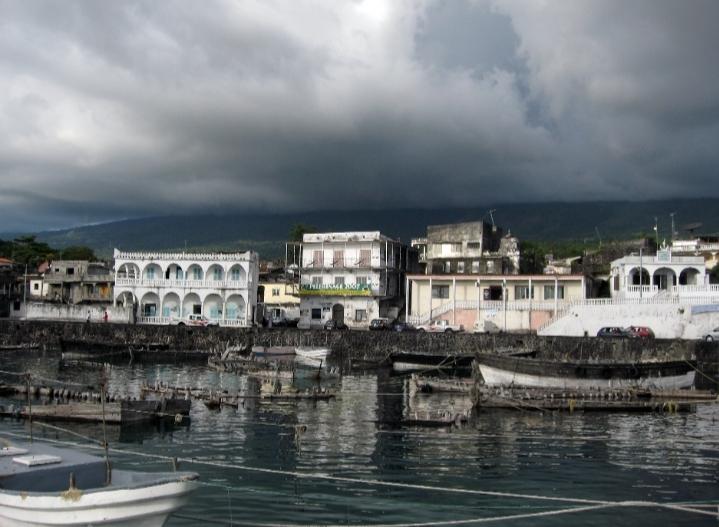
In the warm waters of the Indian Ocean, between the coast of East Africa and Madagascar, lies a small chain of volcanic islands known as Comoros. Often called the Islands of the Moon, Comoros has a history shaped by sailors, traders, sultans, colonizers, and revolutionaries. Though small in size, its story stretches across continents and centuries.
The First Settlers
Unlike mainland African nations with prehistoric kingdoms, Comoros began as a destination. The islands were formed by volcanic activity, rising dramatically from the ocean floor. For centuries, they were uninhabited.
The first settlers likely arrived around the sixth century. They came by sea, possibly from the African mainland, Madagascar, and Southeast Asia. Skilled navigators crossed the Indian Ocean using seasonal winds.
These early settlers established farming and fishing communities. They cultivated crops such as coconut, banana, and rice. The islands’ fertile volcanic soil supported agriculture, while the surrounding ocean provided fish.
Over time, more migrants arrived, especially from the East African coast. African Bantu cultures blended with Arab and Persian influences brought by traders.
Arab Influence and the Rise of Islam
From the eighth century onward, Arab traders sailed across the Indian Ocean linking East Africa, the Middle East, and Asia. Comoros became part of this maritime world.
Islam spread gradually through trade and intermarriage. By the fifteenth century, Islam was firmly established, shaping culture, law, and education.
Local leaders known as sultans ruled the islands. Each island developed its own sultanate. The sultans built stone towns, mosques, and trading centers.
Comorian society became a rich mix of African, Arab, and later Malagasy influences. The Swahili culture of the East African coast deeply shaped language and identity.
The Comorian language, Shikomori, developed from Swahili roots mixed with Arabic and other influences. Arabic became important for religion and scholarship.
Trade and Prosperity
During the height of Indian Ocean trade, Comoros thrived as a stopover point for ships traveling between Africa and Asia.
The islands exported agricultural goods such as cloves, ylang ylang, vanilla, and coconuts. They also participated in the regional slave trade, although on a smaller scale than mainland regions.
Stone towns with coral built houses and narrow streets reflected prosperity. Wealthy families built large homes, and Islamic schools taught religious knowledge.
However, the islands were not unified under a single authority. Rivalries between sultanates sometimes led to internal conflict.
European Arrival
In the sixteenth century, Portuguese sailors reached the Comoros. Later, French traders and colonial officials became increasingly involved.
By the nineteenth century, France began expanding its control in the region, especially after establishing dominance in nearby Madagascar.
In 1841, the island of Mayotte was ceded to France by its sultan. Over time, the other islands also came under French colonial rule.
Comoros became part of the French colonial empire. Plantations were established, and crops such as vanilla and cloves became major exports.
French administration introduced new political systems and infrastructure but also imposed colonial authority. Local power structures were weakened.
The Road to Independence
After World War Two, independence movements spread across Africa and the Indian Ocean. Comorian political leaders began demanding self rule.
In 1974, a referendum was held to decide the future of the islands. Most of the population voted for independence from France.
However, Mayotte chose to remain under French control. This decision created a division that still exists today. Mayotte remains a French overseas department, while the other three islands form the independent nation of Comoros.
On July 6, 1975, Comoros declared independence.
Political Instability
Independence did not bring stability. Comoros experienced numerous coups and political crises in the years that followed.
One of the most controversial figures during this period was French mercenary Bob Denard, who was involved in several coup attempts in Comoros during the late twentieth century.
The country faced internal tensions between its islands. Anjouan and Moheli at times sought greater autonomy or even separation.
In response, constitutional reforms were introduced. The country adopted a rotating presidency system to ensure power sharing among the islands.
Culture and Identity
Despite political challenges, Comoros has maintained a strong cultural identity.
Islam plays a central role in daily life. The majority of the population is Muslim, and religious traditions shape social customs.
Traditional ceremonies, music, and dance are vibrant parts of community life. Weddings are especially important and can be elaborate celebrations lasting days.
Agriculture remains vital to the economy. Comoros is one of the world’s leading producers of ylang ylang, an essential oil used in perfumes.
The islands are known for their natural beauty, including Mount Karthala, an active volcano on Grande Comore.
Comoros Today
Today, Comoros faces economic challenges, including limited natural resources and reliance on agriculture and remittances from citizens living abroad.
The country continues to strengthen democratic institutions while managing regional tensions.
Although small and often overlooked on the global stage, Comoros stands at the meeting point of Africa and the Arab world. Its people carry a blended heritage shaped by the ocean.
Islands Shaped by the Sea
From uninhabited volcanic peaks to thriving Indian Ocean sultanates, from French colonial rule to independence and reform, Comoros has traveled a long path.
Its story is one of migration, trade, faith, and resilience.
The ocean brought its first settlers. The ocean connected it to distant lands. And even today, the sea remains at the heart of Comorian life.
Comoros proves that even small island nations hold histories as vast as the waters that surround them.


Catégories
Lire la suite
Chris Okotie Early Life Chris Okotie was born on June 16, 1958, in Lagos, Nigeria. He grew up in a disciplined and educated family. His father worked in the banking sector, which exposed him early to structure and responsibility. From a young age, Chris showed intelligence and confidence. He attended reputable schools in Lagos and later gained admission into the University of...

Jerry Eze Jerry Eze is a Nigerian Pentecostal pastor and televangelist best known as the founder and lead pastor of Streams of Joy International and the convener of New Season Prophetic Prayers and Declarations, NSPPD. He became widely known through his intense online prayer broadcasts, especially during and after the Covid era, and his ministry later grew into a major global prayer movement....

Nwankwo Kanu In the busy streets of Owerri, where football is more than a game and dreams are chased barefoot across dusty pitches, a tall, slender boy once played with a grace that seemed almost effortless. That boy would grow into one of Africa’s greatest football icons, a Champions League winner, an Olympic hero, and a symbol of resilience. He is Nwankwo Kanu, known simply to...

The Office of the Secretary to the Government of the Federation (OSGF), headed by George Akume, plans to spend ₦496 million in 2026 on just three heavy-duty photocopier machines and office furniture, according to Nigeria’s budget documents. The budget line states it is for the “purchase and installation of heavy-duty photocopy machines for cabinet affairs offices and supply of...

Queen Nzinga Long before modern Angola took shape on the map, before colonial flags tried to redraw the destiny of African kingdoms, there was a woman whose name moved through palaces, battlefields, and whispered campfire stories with equal force. Her name was Queen Nzinga. She was not merely a ruler seated on a throne. She was strategy with a heartbeat, courage in royal cloth,...