Environ
Cabo Verde The Atlantic Islands That Rose from the Sea with Music Memory and Determination
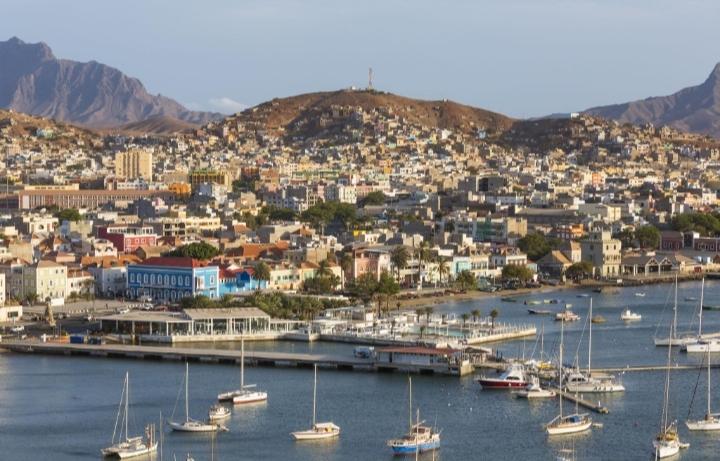
Cabo Verde
Far out in the Atlantic Ocean, off the coast of West Africa, lies a chain of volcanic islands that tell a remarkable story. Cabo Verde, once uninhabited and windswept, grew into a crossroads of cultures, a painful chapter of the Atlantic slave trade, and later a symbol of peaceful independence and resilience. Its journey from empty islands to a proud island nation is one shaped by survival, migration, and music that carries the soul of its people.
The Islands Before People
Unlike many African nations, Cabo Verde had no ancient kingdoms or early indigenous settlements. When Portuguese sailors first arrived in the fifteenth century, the islands were uninhabited.
The archipelago consists of ten main islands and several smaller islets. Formed by volcanic activity, the land is rugged, dry, and often challenged by drought. Rainfall is unpredictable, and fertile land is limited. Yet the islands hold dramatic beauty, with cliffs, mountains, and endless ocean horizons.
In 1460, Portuguese explorers sighted the islands. Shortly after, they began settling them. The lack of an existing population meant the islands became a new colonial experiment.
A Crossroads of Africa and Europe
Portugal established settlements, especially on Santiago island. The location of Cabo Verde along Atlantic trade routes made it strategically important.
Enslaved Africans were brought from the mainland to work on plantations and to serve as laborers. Over time, the islands became deeply connected to the transatlantic slave trade. Ships traveling between Africa, Europe, and the Americas stopped in Cabo Verde to restock supplies and trade.
The mixing of Portuguese settlers and African populations created a unique Creole society. Language, culture, and identity blended into something entirely new.
Kriolu, a Portuguese based Creole language influenced by African languages, became widely spoken. Music, cuisine, and traditions reflected both African and European roots.
Cidade Velha on Santiago became one of the first European colonial cities in the tropics. It grew into an important center of trade in the sixteenth century.
Hardship and Drought
Despite its strategic importance, life in Cabo Verde was difficult. The islands suffered frequent droughts and famines. Crops often failed due to lack of rainfall. Thousands of people died during severe drought periods in the eighteenth and nineteenth centuries.
Because the land could not always sustain its population, migration became a defining feature of Cabo Verdean life. Many left for other Portuguese colonies, Europe, and later the United States.
This migration created a large diaspora community that remains deeply connected to the islands.
Colonial Rule and Cultural Identity
For centuries, Cabo Verde remained under Portuguese colonial rule. Unlike some African colonies, it did not experience large scale wars of conquest because there was no indigenous population to resist. However, the people born on the islands still faced the limits and inequalities of colonial rule.
Education levels in Cabo Verde were relatively higher compared to some other colonies, partly because of the islands’ administrative importance. Yet political power remained in Portuguese hands.
Over time, a strong intellectual movement grew among Cabo Verdeans. Writers and thinkers began reflecting on identity, culture, and the longing for self determination.
The Independence Movement
In the twentieth century, the call for independence spread across Portuguese colonies. One of the most influential figures in the struggle for freedom was Amilcar Cabral.
Although born in Guinea Bissau to Cabo Verdean parents, Cabral became a leading voice for independence for both Guinea Bissau and Cabo Verde. He co founded the African Party for the Independence of Guinea and Cabo Verde.
Armed struggle began in Guinea Bissau, while Cabo Verde’s role was more political and strategic due to its geography. Cabral believed in unity between the two territories.
In 1974, a revolution in Portugal ended the dictatorship there. This opened the door for independence across its colonies.
On July 5, 1975, Cabo Verde officially became an independent nation.
A Peaceful Path Forward
After independence, Cabo Verde initially planned political unity with Guinea Bissau. However, following political changes in Guinea Bissau, the two countries developed separately.
Cabo Verde established a one party system at first, but in 1991 it transitioned peacefully to a multi party democracy. Since then, the country has been recognized as one of Africa’s most stable democracies.
Without significant natural resources, Cabo Verde focused on human development. It invested in education, healthcare, and governance. Tourism and services became major parts of the economy.
Remittances from Cabo Verdeans living abroad also play a vital role in supporting families and the national economy.
Music as the Voice of the Nation
Perhaps nothing defines Cabo Verde more than its music. Morna, a slow and emotional style of music, expresses longing, love, and nostalgia. It reflects the feeling of saudade, a deep sense of yearning.
One of the most famous voices of Cabo Verde was Cesaria Evora. Known as the Barefoot Diva, she brought morna to international audiences and became a symbol of Cabo Verdean pride.
Music connects the islands to their diaspora and keeps cultural identity alive across oceans.
Cabo Verde Today
Today, Cabo Verde stands as a small but resilient island nation. It faces challenges such as limited natural resources, climate vulnerability, and reliance on imports.
Yet it has achieved impressive progress in literacy, political stability, and human development.
From empty volcanic islands to a society shaped by African and European heritage, from colonial outpost to independent democracy, Cabo Verde’s journey is unique in Africa.
It is a country born from the sea, carried by migration, strengthened by culture, and united by music.
Cabo Verde proves that even a small nation with few natural advantages can rise through determination, education, and the enduring power of identity.

Catégories
Lire la suite
Emeka Akumefule Before the viral tweets, before the bold declaration “Best Rapper in Africa,” and before the chart-topping albums, there was a young boy in Nigeria who found comfort in words. The world knows him as Blaqbonez — confident, witty, controversial, and unapologetically ambitious. But his journey began as Emeka Akumefule, a creative child whose...

Sia Sia, whose full name is Sia Kate Isobelle Furler, is an Australian singer, songwriter, and music producer known for her powerful voice, emotional songs, and unique artistic identity. She became globally famous for both her solo music and her songwriting for major artists. She was born on December 18, 1975, in Adelaide, South Australia. Early Life and Background Sia grew up in a...

UN Secretary-General António Guterres has condemned the attacks perpetrated over the weekend in Benue, North Central Nigeria, in which scores of civilians were killed. Guterres said those responsible for the violence should be apprehended. According to news reports, dozens of people were killed while they slept and several were displaced following brutal attacks on the village of...

Oba Sikiru Kayode Adetona In the historic town of Ijebu Ode, where culture moves with rhythm and tradition carries the authority of centuries, one throne has stood as a symbol of continuity and pride. Upon that throne sits one of Nigeria’s longest reigning and most influential monarchs, Sikiru Kayode Adetona, the Awujale of Ijebuland. His story is not merely about longevity. It...
THE BILLIONAIRE IN BORROWED SKIN Clara Mendoza used to believe that love would come to her in sunlight. In her imagination it would arrive gently, carried by laughter and simple joy. A hardworking man with honest hands would take her away from the cramped house she grew up in. They would build something small but real together. Instead, love arrived wrapped in humiliation. Her...