About
About
Benin The Ancient Kingdom of Art Power and Enduring Spirit
Benin
Benin is a land where history breathes through bronze sculptures, royal palaces, and sacred traditions. Long before modern borders were drawn, powerful kingdoms rose on its soil. From early settlements to thriving empires, from colonial struggles to independence, the story of Benin is one of culture, resilience, and transformation.
The Earliest Beginnings
The region now known as Benin was home to early human communities thousands of years ago. Archaeological evidence shows that farming and ironworking were practiced in West Africa long before European contact.
By the first millennium, organized societies had formed in the area. Communities lived by farming crops such as yams and millet, fishing along rivers, and trading with neighboring regions. These early societies laid the foundation for what would later become powerful kingdoms.
The land’s location between coastal trade routes and inland networks made it ideal for economic and cultural exchange.
The Rise of the Kingdom of Dahomey
One of the most powerful states in the region was the Kingdom of Dahomey, founded in the seventeenth century. Dahomey emerged in the southern part of present day Benin and grew into a centralized and disciplined kingdom.
The kingdom’s capital was Abomey, where massive earthen palaces were built for the kings. These palaces were decorated with symbols representing victories, strength, and royal authority. Today, the Royal Palaces of Abomey remain a powerful reminder of Benin’s rich past.
The kings of Dahomey ruled with strong authority. The kingdom had a structured administration, an organized military, and a unique political system.
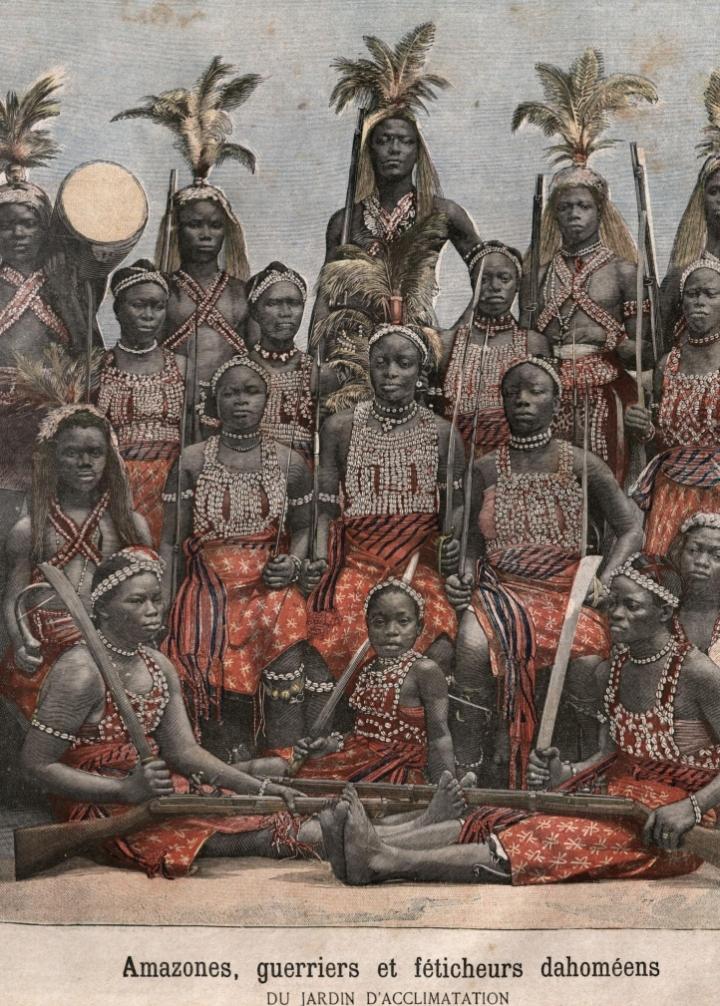
One of the most famous aspects of Dahomey was its all female military unit often called the Dahomey Amazons. These women warriors were highly trained and fiercely loyal to the king. Their bravery became legendary and remains a symbol of strength in Beninese history.
Trade and European Contact
In the fifteenth century, Portuguese traders arrived along the West African coast. They were followed by other European powers including the French, British, and Dutch.
The region became deeply involved in the transatlantic slave trade. Many captives from Dahomey and surrounding areas were sold and transported across the Atlantic to the Americas. This period caused immense suffering and demographic loss.
The port city of Ouidah became one of the main slave trading centers on the coast. While trade brought weapons and goods to the kingdom, it also fueled wars and instability.
Despite the tragedy of the slave trade, Dahomey remained powerful for many years. It balanced trade, warfare, and diplomacy to maintain its influence.
French Colonization
By the nineteenth century, European colonial ambitions intensified. France sought to expand its influence in West Africa. After several military confrontations with Dahomey, French forces defeated the kingdom in the 1890s.
In 1894, Dahomey officially became a French colony and was later incorporated into French West Africa.
Under French rule, traditional systems of governance were weakened. The economy was reorganized to serve colonial interests, focusing on palm oil and agricultural production. Education and infrastructure were introduced but mainly benefited colonial administration.
Despite colonial control, local traditions, religion, and culture survived.
Religion and Culture
Benin is often associated with Vodun, sometimes called Voodoo. Vodun is a traditional religion that began in this region centuries ago. It emphasizes respect for ancestors, spiritual forces, and harmony between the physical and spiritual worlds.
Vodun spread to the Americas during the slave trade and influenced religious practices in countries such as Haiti and Brazil.
Benin’s cultural identity also includes music, dance, storytelling, and vibrant festivals. Drumming and ceremonial performances remain central to community life.
The country’s languages include Fon, Yoruba, and many others, while French remains the official language due to colonial history.
The Road to Independence
In the twentieth century, the desire for independence grew across Africa. After World War Two, political awareness increased among the people of Dahomey.
Nationalist movements began demanding self rule. In 1960, Dahomey gained independence from France.
However, the early years of independence were marked by political instability. Several military coups occurred, and governments changed frequently.
In 1975, the country changed its name from Dahomey to the People’s Republic of Benin. The name Benin was chosen to reflect unity and avoid favoring one ethnic group over others. It was inspired by the Bight of Benin along the coast.
The country adopted a Marxist inspired government during this period, but economic challenges persisted.
Transition to Democracy
In the late 1980s, economic difficulties and public pressure led to political reform. In 1990, Benin held a National Conference that paved the way for multi party democracy.
Benin became one of the first African countries to peacefully transition from a Marxist government to a democratic system.
Since then, the country has held multiple elections and built a reputation as one of West Africa’s more stable democracies.
Benin Today
Today, Benin is a country rich in history and culture. Cotonou serves as the economic capital, while Porto Novo is the official political capital.
Agriculture remains important, with cotton being a major export. The country also continues to celebrate its cultural heritage, attracting visitors interested in its history, festivals, and traditions.
Tourists visit the Royal Palaces of Abomey, the Door of No Return in Ouidah, and vibrant markets filled with crafts and textiles.
Benin stands as a reminder of Africa’s ancient power, colonial struggle, and modern resilience.
A Story of Continuity
From early farming communities to the rise of the Kingdom of Dahomey, from the pain of the slave trade to French colonization, and from independence to democracy, Benin’s story is one of survival and transformation.
It is a nation that preserved its traditions while adapting to change. A country that endured hardship but kept its cultural soul alive.
Benin is not just a place on the map. It is a living history of art, courage, spirituality, and determination.

Categorías
Read More
Jenné Jeno Long before the rise of famous empires like Mali and Songhai, long before the arrival of European explorers in West Africa, there existed an extraordinary city in the fertile floodplains of the Niger River. This city was Jenné Jeno, one of the oldest known urban centers in sub Saharan Africa. Today Jenné Jeno lies quietly near the famous city of...
Jim Ovia: The Banker Who Dreamed in Code and Built a Financial Empire There are men who inherit systems, and there are men who build them from scratch. Jim Ovia belongs firmly to the second group. His life story is not just about banking. It is about vision, patience, discipline, technology, and the courage to imagine a Nigeria where financial institutions could stand shoulder to shoulder with...

Residents of Kafanchan and Zango-Kataf Local Government Area of Kaduna State have accused the council chairman, Mr. Bege Joseph Gaya, of allegedly using the police to arrest and detain a young man over a Facebook post critical of the handling of Christmas welfare packages. The man, Julius Shehu Tagwai, was reportedly arrested on January 9 after honouring an invitation to the Zonkwa Police...

EPISODE 3: TOO LATE TO CHOOSE Time is a silent judge. It never shouts, never argues yet it delivers judgment with painful accuracy. Years after Mrs Titi left Apapa with nothing but her pregnancy and tears, life had turned its wheel. Baba Samuel was no longer the strong bricklayer everyone admired. His back was bent. His hands shook. Jobs no longer came like before. The house that once felt...

Aderíyọ̀ was born into royalty, but more than that, she was born to lead. From a young age, she showed a sharp mind and steady authority. She understood the customs of the kingdom, the meaning of its laws, and the weight of its history. When her father, the king, grew weak with illness, many in the palace quietly believed she was the right heir. But tradition refused to bend....