Σχετικά
The History of Ethiopia: From Ancient Civilization to Modern African Power
Introduction
The history of Ethiopia is one of the oldest and most remarkable in the world. Often referred to as the cradle of humanity, Ethiopia holds a unique place not only in African history but in global civilization. Unlike most African nations, Ethiopia was never permanently colonized, and it developed a rich cultural, religious, and political tradition that stretches back thousands of years. From ancient kingdoms and biblical legends to modern political struggles and economic transformation, Ethiopia’s story is one of resilience, faith, power, and identity.
Early Human Origins
Ethiopia’s history begins long before recorded civilization. The country is part of the Horn of Africa, a region considered one of the birthplaces of humankind. In 1974, archaeologists discovered the fossil remains of “Lucy” in the Afar region. Lucy, estimated to be over 3 million years old, provided important evidence about early human evolution. This discovery confirmed that some of the earliest human ancestors lived in what is now Ethiopia.
Archaeological findings show that ancient communities in Ethiopia developed tools, farming systems, and early trade networks thousands of years ago. These early societies laid the foundation for organized kingdoms.
The Kingdom of D’mt (c. 1000–400 BCE)
One of the earliest known civilizations in Ethiopia was the Kingdom of D’mt, which existed around 1000 BCE. Located in northern Ethiopia and parts of modern Eritrea, D’mt had strong trade links with South Arabia. It developed irrigation systems, monumental stone architecture, and early forms of writing influenced by Sabaean culture.
Though little is fully known about D’mt, it is believed to have laid the groundwork for one of Africa’s most powerful ancient empires the Kingdom of Aksum.
The Kingdom of Aksum (c. 100 CE–940 CE)
The Kingdom of Aksum was one of the great civilizations of the ancient world. Emerging around the first century CE, Aksum became a major trading empire connecting Africa, the Middle East, India, and the Mediterranean.
Aksum traded gold, ivory, salt, and spices. It minted its own coins, making it one of the few African civilizations of that era to develop its own currency. Massive stone obelisks, some still standing today in Axum, symbolized the empire’s power and advanced engineering skills.
Adoption of Christianity
In the 4th century CE, under King Ezana, Aksum became one of the first nations in the world to adopt Christianity as a state religion. This decision shaped Ethiopia’s identity permanently. The Ethiopian Orthodox Church became a central institution in society and remains influential today.
The church developed its own religious texts in Ge’ez, an ancient Ethiopian language still used in liturgy. Christianity connected Ethiopia culturally to the Eastern Roman (Byzantine) world.
Decline of Aksum
By the 7th century, Aksum began to decline. The rise of Islamic powers around the Red Sea affected trade routes. Environmental changes and internal political challenges also weakened the empire. By the 10th century, Aksum’s power had significantly reduced, but its religious and cultural legacy remained strong.
The Zagwe Dynasty (c. 1137–1270)
After Aksum’s decline, power shifted to the Zagwe Dynasty. The Zagwe rulers are most famous for constructing the rock-hewn churches of Lalibela. These extraordinary churches were carved directly into solid rock and remain one of the greatest architectural achievements in Africa.
The churches of Lalibela became an important pilgrimage center for Ethiopian Christians. The Zagwe period reinforced Christianity’s central role in governance and culture.
However, the Zagwe rulers eventually faced opposition from groups claiming descent from the ancient Aksumite kings.
The Solomonic Dynasty (1270–1974)
In 1270, a new dynasty claimed power, stating they were descendants of King Solomon of Israel and the Queen of Sheba. This became known as the Solomonic Dynasty.
The Solomonic rulers strengthened Ethiopia’s identity as a Christian kingdom surrounded by Muslim territories. Over centuries, Ethiopia faced conflicts with neighboring Muslim states and later European powers.
The Era of Ahmad ibn Ibrahim al-Ghazi
In the 16th century, Ethiopia faced invasion from Muslim forces led by Ahmad ibn Ibrahim al-Ghazi, often called Ahmad Gragn. His campaigns devastated much of the Christian kingdom. However, with assistance from Portuguese forces, Ethiopia eventually defeated him.
This period showed Ethiopia’s vulnerability but also its ability to recover.
The Age of Princes (Zemene Mesafint)
From the late 18th to mid-19th century, Ethiopia experienced a period called the “Age of Princes.” During this time, central authority weakened, and regional lords competed for power. The emperor became largely symbolic, while local rulers controlled territories.
This fragmentation weakened Ethiopia and made it vulnerable to external threats.
The Rise of Emperor Tewodros II
In 1855, Emperor Tewodros II ended the Age of Princes by reuniting much of the country. He attempted to modernize Ethiopia by strengthening the army and central government. However, conflicts with Britain led to the British Expedition to Abyssinia in 1868. Tewodros committed suicide rather than surrender.
Despite his tragic end, he is remembered as a modernizer.
Emperor Menelik II and the Battle of Adwa
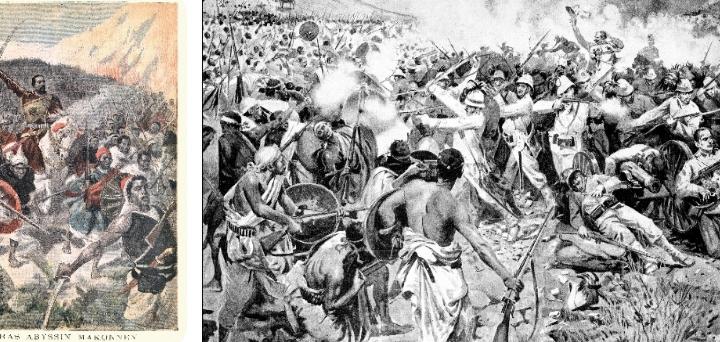
Emperor Menelik II ruled from 1889 to 1913 and became one of Ethiopia’s greatest leaders. During his reign, European powers were colonizing Africa. Italy attempted to make Ethiopia a colony.
In 1896, Ethiopian forces decisively defeated Italy at the Battle of Adwa. This victory was historic. It made Ethiopia one of the only African countries to resist European colonization successfully.
The victory at Adwa inspired anti-colonial movements across Africa and among people of African descent worldwide.
Menelik also expanded Ethiopia’s territory and modernized the country by building roads, introducing electricity, and founding Addis Ababa as the capital.
Emperor Haile Selassie (1930–1974)
Haile Selassie became emperor in 1930. He sought to modernize Ethiopia’s government, education, and infrastructure.
Italian Occupation (1936–1941)
In 1935, Fascist Italy under Mussolini invaded Ethiopia. Despite resistance, Italy occupied the country in 1936. Haile Selassie went into exile and appealed to the League of Nations, warning of the dangers of fascism.
During World War II, British and Ethiopian forces defeated the Italians, and Haile Selassie returned in 1941.
Postwar Modernization and Challenges
After his return, Selassie introduced reforms, including a constitution and expansion of education. However, land inequality, poverty, and political repression created dissatisfaction.
By the early 1970s, famine and economic crisis weakened his government.
The Derg Military Regime (1974–1991)
In 1974, a military junta known as the Derg overthrew Haile Selassie. He died in detention in 1975.
The Derg, led by Mengistu Haile Mariam, established a Marxist-Leninist government aligned with the Soviet Union. The regime nationalized land and industries.
The Red Terror
The Derg launched a brutal campaign called the Red Terror against political opponents. Thousands were imprisoned, tortured, or executed.
Ethiopia also faced civil wars and a devastating famine in the 1980s that drew global attention.
By 1991, rebel groups overthrew the Derg government.
The Federal Democratic Republic (1991–Present)
After the Derg’s fall, Ethiopia established a federal system based on ethnic regions. The country became officially known as the Federal Democratic Republic of Ethiopia.
Eritrean Independence
In 1993, Eritrea became independent after a referendum. However, tensions later led to war between Ethiopia and Eritrea from 1998 to 2000.
Economic Growth
In the 2000s and 2010s, Ethiopia experienced rapid economic growth. Major infrastructure projects, including the Grand Ethiopian Renaissance Dam, aimed to transform the economy.
Addis Ababa became the diplomatic capital of Africa, hosting the African Union headquarters.
Modern Political Developments
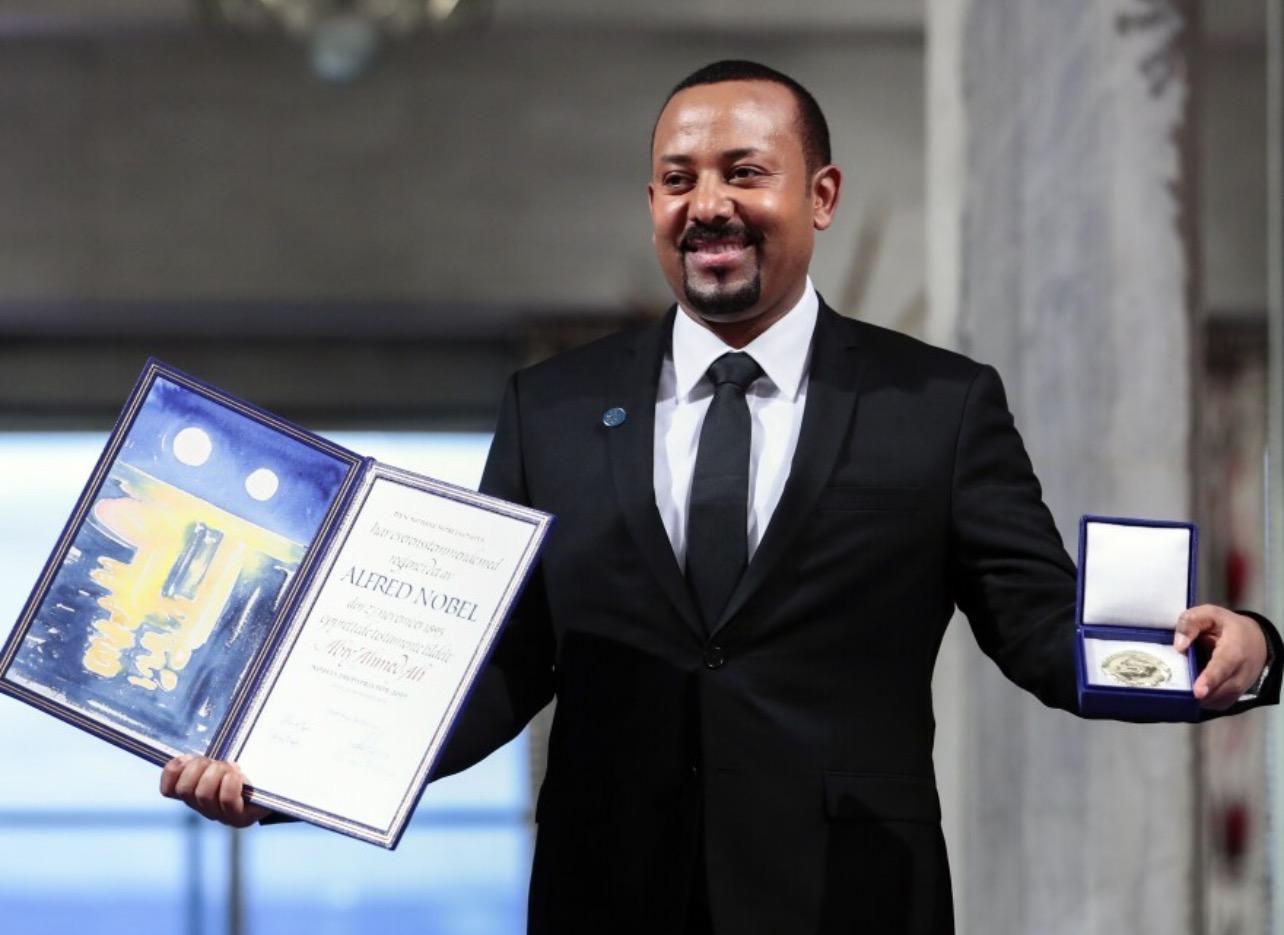
In 2018, Abiy Ahmed became Prime Minister and introduced political reforms. He signed a peace agreement with Eritrea, earning the Nobel Peace Prize in 2019.
However, ethnic tensions and political conflicts continued. In 2020, war broke out in the Tigray region, causing humanitarian concerns. A peace agreement in 2022 aimed to restore stability.
Culture and Religion
Ethiopia has a rich cultural heritage shaped by Christianity, Islam, and traditional beliefs. The Ethiopian Orthodox Church remains influential. Islam also has deep historical roots in the country, dating back to the early days of Prophet Muhammad.
Ethiopia has its own calendar, script (Ge’ez), and unique traditions. Coffee, believed to have originated in Ethiopia, plays a major role in social life.
Conclusion
The history of Ethiopia is a story of endurance, independence, and transformation. From ancient Aksumite kings to modern political leaders, Ethiopia has maintained a strong sense of identity. It resisted colonization, preserved ancient religious traditions, and continues to shape Africa’s political and economic future.
Today, Ethiopia stands at a crossroads—balancing its ancient heritage with modern challenges. Yet its long history proves that it remains one of Africa’s most resilient and influential nations.
Ethiopia’s past is not just African history it is world history.

Κατηγορίες
Διαβάζω περισσότερα
Robert Mugabe Early Life Robert Mugabe was born on February 21, 1924, in Kutama, a small village in what was then Southern Rhodesia, now Zimbabwe. He grew up in a poor Catholic family raised mostly by his mother after his father left the home. From a young age, Mugabe loved books. He was quiet, serious, and very intelligent. While other children played, he preferred to read and...
I join well-meaning leaders, the people of the South East, and indeed well-meaning Nigerians to call for a political solution that will lead to the release of Mazi Nnamdi Kanu, on terms that will bring about the cessation of violence, the return of normalcy, and full integration for all. This is not just for the people of the South East; I believe that this is a sentiment shared by all...

After that call, days passed like a blur. I moved through life like a ghost present, but empty. People spoke to me, but their voices sounded far away. At night, sleep refused to come. Whenever I closed my eyes, I heard Folarin’s voice saying, “I want a different life now.” Different life… without me. One evening, while scrolling through my phone aimlessly, I...

A survivor of the November 18 attack on Christ Apostolic Church (CAC), Eruku, Kwara State, has recounted the terrifying ordeal he and other worshippers endured while in captivity. He was one of the 38 victims that security operatives successfully rescued—a development confirmed by President Bola Tinubu. Speaking with TVC, he said the gunmen stormed the church barely 30 minutes after the...

Abiy Ahmed Early Life Abiy Ahmed was born on August 15, 1976, in Beshasha, a small town in Ethiopia. He grew up in a large family with many siblings. His father was Muslim, and his mother was a Christian, which helped him understand different religions and cultures from a young age. Life in his village was simple but not easy. Ethiopia at the time faced many challenges, including...