About
About
Seun Kuti: The Fire in the Blood, The Voice of a New Afrobeat Generation
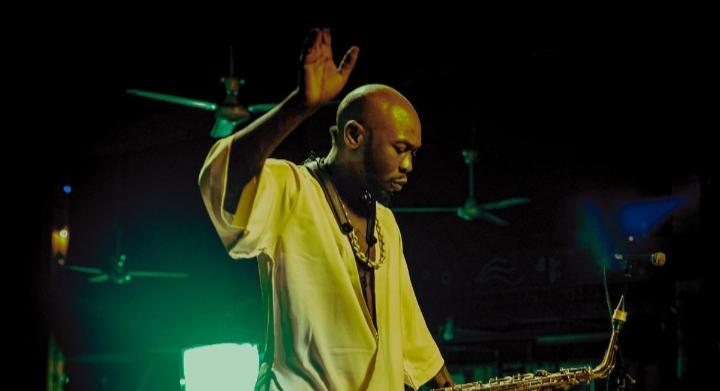
Seun Kuti
To be born into a legend’s shadow is not a simple thing. Some children shrink beneath it. Others rebel against it. But Seun Kuti did something different. He stepped into it, stood tall, and carried the fire forward.
As the youngest son of Fela Kuti, Seun inherited more than a famous surname. He inherited a movement. Afrobeat was never just music. It was resistance, rhythm, rebellion, and political truth wrapped in horns and percussion. Growing up inside that world meant that Seun’s childhood was not ordinary. It was loud. It was political. It was revolutionary.
This is the story of a boy raised in Kalakuta who grew into one of Africa’s most outspoken musical voices.
A Childhood in the Shrine
Seun Kuti was born Oluseun Anikulapo Kuti on January 11, 1983, in Lagos, Nigeria. By the time he was born, his father Fela was already a global icon and a constant target of Nigeria’s military regimes.
Seun did not grow up in quiet suburban comfort. He grew up in the Kalakuta Republic, the communal compound founded by Fela. It was a place of music, activism, controversy, and confrontation.
Musicians rehearsed day and night. Political discussions filled the air. Soldiers sometimes surrounded the compound. Tear gas and music existed side by side.
For young Seun, this was normal.
He saw firsthand how art could challenge power. He watched his father face arrests, beatings, and bans. Yet Fela never stopped playing.
Seun absorbed this lesson early: music is not just entertainment. It is weapon.
Learning the Horns and the Fire
Seun was drawn to music naturally. He began playing instruments as a child, particularly the saxophone. He studied his father’s style closely, but he also developed his own rhythm.
At just nine years old, Seun began performing with Egypt 80, Fela’s legendary band. The stage was not intimidating. It was home.
Imagine being a child, standing in front of thousands at The Shrine in Lagos, blowing a saxophone while your father commands the crowd. That was Seun’s childhood.
But beyond performance, he was learning discipline. Egypt 80 was not a casual band. It was tight, political, and musically complex.
Seun was being trained not just as a musician, but as a custodian of Afrobeat.
The Death of a Legend
In 1997, when Seun was only 14 years old, Fela Kuti died.
Nigeria mourned. The world mourned.
For Seun, it was both personal and public loss.
The question hung in the air: Who would carry Afrobeat forward?
While his older brother Femi Kuti had already established his own musical path, Seun made a bold decision.
At just 14, he took over leadership of Egypt 80.
Many doubted him. He was young. The shadow was enormous.
But he stepped forward.
Taking Control of Egypt 80
Leading Egypt 80 was not symbolic. It was real responsibility.
The band had history, expectation, and global reputation.
Seun did not attempt to imitate his father exactly. He honored the structure of Afrobeat — long instrumental sections, heavy horns, polyrhythms, political lyrics — but infused it with his own voice.
He understood that Afrobeat without political consciousness would be empty.
So he remained outspoken.
The Rise of His Solo Career
In 2008, Seun Kuti released his debut album Many Things.
The album addressed corruption, inequality, and African self determination. It signaled that he was not merely Fela’s son. He was an artist with his own conviction.
Subsequent albums like From Africa With Fury: Rise and Black Times continued that trajectory.
His lyrics criticized global capitalism, African leadership failures, and systemic injustice.
He toured internationally, performing in Europe, America, and across Africa. Audiences responded not just to the rhythm, but to the message.
Afrobeat remained alive.
Political Voice in Modern Nigeria
Like his father, Seun Kuti has never shied away from political commentary.
He speaks openly about corruption in Nigeria. He criticizes police brutality. He questions global power structures.
During the End SARS protests in 2020, which demanded reform of Nigeria’s police force, Seun was vocal in his support for justice and accountability.
His activism sometimes places him in direct confrontation with authorities.
In 2023, he faced legal trouble after a public altercation with a police officer. The incident sparked national debate. Supporters viewed it as resistance to harassment. Critics saw it differently.
Regardless of perspective, one thing remains clear: Seun does not separate music from politics.
The Shrine Legacy
The New Afrika Shrine in Lagos, originally founded by Fela and later rebuilt by Femi Kuti, remains central to Seun’s identity.
Performing at The Shrine is not just a gig. It is ritual.
There, Seun channels both heritage and modern urgency. The stage becomes a space where rhythm meets resistance.
Young Nigerians who never saw Fela live now see Seun.
The fire continues.
Musical Style and Identity
Seun Kuti’s sound remains deeply rooted in traditional Afrobeat structure:
Extended grooves
Heavy brass sections
Call and response vocals
Politically charged lyrics
Yet he incorporates modern influences and collaborates with international artists.
He has worked with musicians outside Africa, expanding Afrobeat’s reach.
His saxophone playing is intense and expressive. His stage presence is commanding.
He does not perform as a copy. He performs as heir.
Standing Between Generations
Seun occupies a unique position.
He is both legacy and innovation.
He carries his father’s ideology but navigates a different era. Military dictatorship has been replaced by flawed democracy. Globalization has reshaped culture.
He must translate resistance for a new generation.
Themes That Define His Journey
Across his life and music, certain themes remain consistent:
Political accountability
African unity
Anti imperialism
Cultural pride
Art as resistance
Seun believes Africa’s problems must be confronted honestly, without fear or romanticism.
Personal Life and Character
Beyond stage lights, Seun is known for strong opinions and intellectual engagement. He reads widely and speaks passionately about history and politics.
He has also spoken about the burden and honor of carrying the Kuti name.
He understands that expectation will always follow him.
Yet he seems comfortable within it.
The Meaning of His Story
Seun Kuti’s life is a story of inheritance and reinvention.
He did not choose to be born into Afrobeat royalty. But he chose to uphold it.
From a child blowing saxophone beside Fela to a global performer leading Egypt 80, his journey reflects resilience and purpose.
He could have chosen a quieter path.
Instead, he chose the stage.
Seun Kuti continues to tour, record, and speak.
The rhythm is heavy. The horns are sharp. The message is clear.
The fire did not die in 1997.
It found a new voice.
And that voice is Seun Kuti.

Categorii
Citeste mai mult
Mildred Okwo Mildred Okwo is a Nigerian filmmaker, director, producer, and screenwriter known for her impactful storytelling and contributions to Nollywood. She is respected for creating films that blend entertainment with strong social messages and high production quality. Early Life and Background Mildred Okwo was born on September 28, 1966, in Enugu State, Nigeria. She grew up in a...
Every year during Christmas, many Muslims receive food from neighbours, friends, or colleagues. This often raises an important question: Is it permissible in Islam to eat Christmas food? Islam provides guidance on this issue through general principles found in the Qur’an and the Sunnah, even though Christmas itself is not mentioned by name. What Islam Allows Islam permits Muslims to...

David survived, but survival is not the same as restoration. After weeks in the hospital, he returned home thinner, quieter, and burdened with a record that would follow him for years. The confidence he once carried like a crown had faded. The friends who encouraged his recklessness disappeared. The phone that never stopped ringing became silent. Our house changed. The laughter I...
Korra Obidi Korra Obidi is a Nigerian dancer, singer, actress, and social media personality known for her energetic dance performances, bold personality, and global online presence. Her full name is Anita Obidi Korra, and she was born on June 23, 1991, in Oshimili North Local Government Area, Delta State, Nigeria. Early Life and Background Korra Obidi was born into a Nigerian family...
Episode Three (18+) “Why she no go open? She go don hear about us na, and have decided to give in. I thought she is claiming hard to get?” Mark said smiling…. That was the beginning of their DOOM.. One week gone, and they kept counting down on the two weeks given to them by Lucifiana. But in all these period, she was not seen anywhere around the campus, neither...