About
About
Desmond Tutu: The Laughing Prophet Who Fought Apartheid With Faith
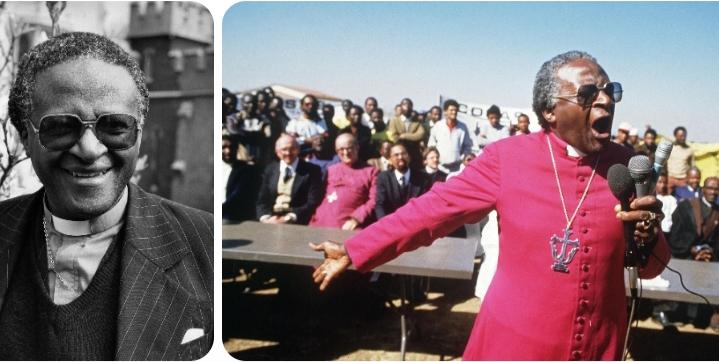
Desmond Tutu: The Laughing Prophet Who Fought Apartheid With Faith
Desmond Tutu
There are revolutionaries who carry weapons. There are revolutionaries who carry words. And then there are revolutionaries who carry both moral authority and unshakable joy. Archbishop Desmond Mpilo Tutu was one of the latter. He fought a brutal system not with guns but with sermons, compassion, and a stubborn belief in justice. He stood in the face of apartheid, a system designed to break human dignity, and answered it with laughter, prayer, and fearless truth.
But before the Nobel Peace Prize, before the purple robes and global recognition, there was a small boy growing up in a segregated South Africa where his future was supposed to be limited by the color of his skin.
This is the story of Desmond Tutu.
A Child in a Divided Land
Desmond Mpilo Tutu was born on October 7, 1931, in Klerksdorp, a mining town in South Africa. His father, Zachariah Tutu, was a schoolteacher. His mother, Aletta, worked as a domestic worker and later as a cook at a school for the blind.
South Africa in the 1930s was already deeply divided by racial inequality. Though apartheid as a formal policy would only begin in 1948, segregation and discrimination were already part of daily life.
Young Desmond grew up observing two worlds. One world was white and privileged. The other was Black and restricted.
He saw humiliation. He saw injustice. But he also saw resilience in his parents.
His father valued education deeply. His mother valued faith and kindness.
Those two pillars would define Tutu’s life.
A Sickly Boy With Big Questions
As a teenager, Desmond Tutu contracted tuberculosis. He spent more than a year in hospital during his recovery. Illness forced him into reflection.
During that time, an Anglican priest named Trevor Huddleston regularly visited him. Huddleston was one of the few white clergy members who openly opposed racial discrimination.
The kindness and courage of that priest left a mark on Tutu’s heart.
For the first time, he saw Christianity not as passive obedience but as moral resistance.
He began to consider the priesthood.
Education and Early Teaching
After finishing school, Tutu initially trained as a teacher at Pretoria Bantu Normal College. Teaching was one of the few professions available to Black South Africans at the time.
He taught at several schools and quickly realized the cruelty of the Bantu Education system introduced by the apartheid government. The system was designed to limit Black South Africans to menial labor roles.
Tutu was outraged.
He once said that Bantu Education was meant to prepare Black children for a life of subservience.
He could not accept that.
In protest, he resigned from teaching in 1957.
This was a turning point.
Entering the Ministry
After leaving teaching, Tutu enrolled at St. Peter’s Theological College in Johannesburg to train for Anglican priesthood.
He was ordained as an Anglican priest in 1960.
The Sharpeville Massacre that same year shocked the nation. Police had opened fire on peaceful protesters opposing pass laws, killing dozens.
South Africa was entering one of its darkest eras.
Tutu did not retreat.
He moved forward.
Studies Abroad and Expanding Vision
In the 1960s, Tutu traveled to London to further his theological studies at King’s College London. There, he encountered global perspectives on justice, theology, and human rights.
He earned a master’s degree in theology.
Living abroad exposed him to societies without legalized racial segregation. It deepened his conviction that apartheid was not inevitable. It was constructed.
And what is constructed can be dismantled.
Returning to a Nation in Chains
When Tutu returned to South Africa in the early 1970s, apartheid had tightened its grip.
He became Dean of St. Mary’s Cathedral in Johannesburg and later Bishop of Lesotho.
His sermons were no longer just about heaven. They were about dignity. Justice. Equality.
He spoke openly against apartheid.
His voice began to carry weight.
A Fearless Critic of Apartheid
In 1978, Tutu became General Secretary of the South African Council of Churches. This position placed him at the center of religious and political discourse.
He used the platform boldly.
He condemned apartheid as evil. He called it immoral and unchristian.
He urged international sanctions against South Africa.
The apartheid government saw him as a threat.
He received death threats. His passport was confiscated at times.
But he did not stop speaking.
The Nobel Peace Prize
In 1984, Desmond Tutu was awarded the Nobel Peace Prize.
The award recognized his nonviolent struggle against apartheid.
The world applauded.
But back home, apartheid still stood.
Tutu used the global spotlight to intensify pressure on the regime.
He continued calling for sanctions and divestment.
His laughter remained. His smile remained. But beneath it was iron resolve.
A Shepherd of Reconciliation
When apartheid finally began to crumble in the early 1990s, South Africa faced a dangerous question.
How do you transition from oppression to democracy without descending into revenge?
After Nelson Mandela became president in 1994, he appointed Tutu as chairman of the Truth and Reconciliation Commission.
The commission was tasked with investigating human rights abuses committed during apartheid.
Victims shared painful testimonies. Perpetrators confessed crimes in exchange for possible amnesty.
Tutu often wept openly during hearings.
He believed justice and forgiveness must walk together.
He called it Ubuntu, the idea that humanity is shared.
Without forgiveness, he believed, the nation would bleed forever.
A Voice Beyond South Africa
Tutu did not limit his activism to apartheid.
He spoke out against injustice globally.
He criticized political leaders when necessary, including those within the African National Congress.
He advocated for LGBTQ rights, arguing that discrimination of any kind contradicts Christian love.
He supported campaigns against poverty and HIV AIDS stigma.
He remained morally consistent even when controversial.
Personal Life
Tutu married Nomalizo Leah Shenxane in 1955. They had four children together.
Despite his global stature, he maintained a warm and humorous personality.
He loved dancing.
He loved laughter.
He refused to let bitterness define him.
Later Years and Death
As he aged, Tutu gradually stepped back from public leadership roles.
He remained a respected elder statesman of moral conscience.
On December 26, 2021, Desmond Tutu died at the age of ninety.
South Africa mourned deeply.
The world paid tribute.
He was not merely a bishop.
He was a moral compass.
Legacy
Desmond Tutu proved that faith can be active.
That laughter can coexist with resistance.
That forgiveness can follow horror.
He helped dismantle apartheid not through violence but through moral clarity.
He reminded the world that justice without compassion becomes vengeance.
And compassion without justice becomes weakness.
He carried both.
Final Reflection
Desmond Tutu began life as a sickly boy in a segregated land.
He became a teacher.
Then a priest.
Then a prophet of justice.
He challenged a brutal system.
He helped heal a wounded nation.
He laughed in the face of hatred.
And he proved that courage does not always roar.
Sometimes it smiles.
And keeps speaking anyway.


Categorieën
Read More
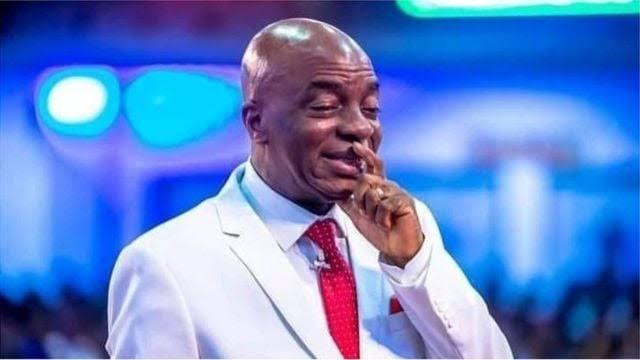
Bishop Oyedepo is currently facing public scrutiny following allegations from a former security guard, Greatness, who claimed: Surveillance cameras were installed in the kitchen and garden to prevent staff from consuming any food, including leftovers. Employees were paid as little as ₦500 per day and were responsible for their own meals, despite working long hours. Fresh food was...
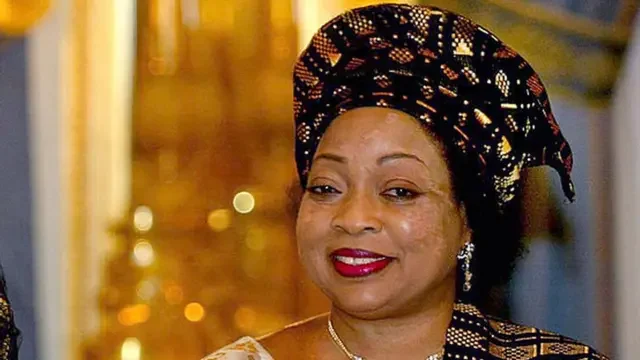
Stella Obasanjo Stella Oluremi Obasanjo was the wife of former Nigerian president Olusegun Obasanjo and served as First Lady of Nigeria from 1999 to 2005. She became known for her humanitarian activities, charity work, and advocacy for women, children, and vulnerable people in society. Although her time as First Lady was relatively short, Stella Obasanjo left a lasting impression...
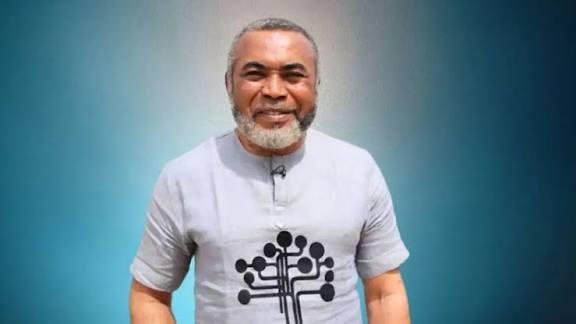
Zack Orji Zack Orji is a veteran Nigerian actor, filmmaker, producer, and director widely respected for his powerful roles in early Nollywood classics. With a career spanning over three decades, he remains one of the pillars of Nigeria’s film industry. Early Life and Background Zack Orji was born on October 10, 1960, in Libreville, Gabon. Although born outside...
Sheikh Qaribullah Nasiru Kabara Early Life and Background Sheikh Qaribullah Nasiru Kabara was born into a respected Islamic family in Kano State, Nigeria. He came from the famous Kabara lineage, a family widely known for its deep roots in Islamic scholarship and leadership, especially within the Qadiriyya Islamic movement in Northern Nigeria. Growing up in Kano, a city known for its...
Sophia Egbueje Sophia Egbueje is a Nigerian entrepreneur, fashion enthusiast, and social media personality known for her influence in luxury lifestyle and fashion circles. She has built a public image centered around style, elegance, and modern entrepreneurship, gaining attention within Nigeria’s social scene. Early Life and Background Sophia Egbueje was born and raised...