О нас
О нас
Bishop David Oyedepo: The Covenant Dreamer Who Built a Global Ministry
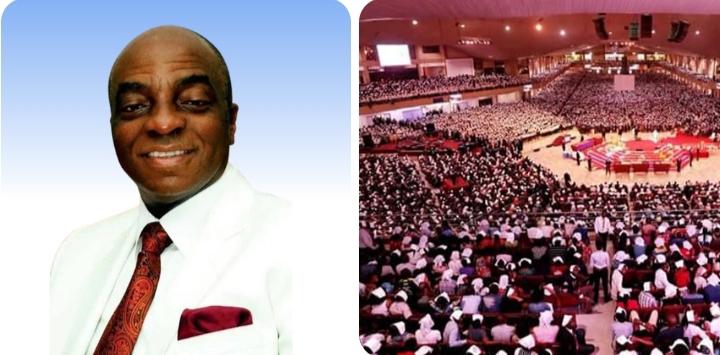
Bishop David Oyedepo: The Covenant Dreamer Who Built a Global Ministry
David Oyedepo
There are men who inherit pulpits. There are men who borrow platforms. And then there are men who build from scratch, brick by brick, word by word, faith by faith. Bishop David Olaniyi Oyedepo belongs to the last category. His life is a story of conviction, controversy, discipline, vision, and relentless belief in divine mandate.
From a small town in Kwara State to the leadership of one of the largest church auditoriums in the world, his journey has been anything but ordinary.
This is the story of Bishop David Oyedepo.
A Child Raised Between Faith and Tradition
David Oyedepo was born on September 27, 1954, in Osogbo, though he hails from Omu Aran in present day Kwara State, Nigeria. He was born into a religiously diverse family. His father was Muslim, while his mother was a committed member of the Eternal Order of the Cherubim and Seraphim, a Christian denomination known for its prophetic worship style.
This spiritual diversity shaped his early worldview. He was exposed to discipline, prayer, and moral instruction from childhood.
He grew up in a modest environment. Nigeria in the 1950s and 1960s was transitioning from colonial rule to independence. Dreams were large. Infrastructure was limited. Education was a ladder many families hoped their children would climb.
Young David was not immediately known as a preacher. He was observant. Reflective. Serious minded.
His grandmother played a profound role in his spiritual formation. She reportedly took him to church regularly and instilled in him deep reverence for God. Those early seeds would later define his entire life.
Education and Early Aspirations
Oyedepo attended primary and secondary schools in Nigeria before gaining admission to study Architecture at Kwara State Polytechnic. He later also studied in the field of building technology.
Architecture is a discipline of vision. You imagine what does not yet exist, then draw it into reality. That mindset would later parallel his ministry style.
After graduation, he worked briefly in the civil service as a housing officer in the Ministry of Housing in Ilorin. It was a stable path. Predictable. Respectable.
But something was stirring within him.
The 1981 Encounter
In May 1981, according to his personal testimony, Oyedepo experienced what he describes as an eighteen hour vision. He has often recounted that during this spiritual encounter, he received a mandate from God to liberate the world from all oppression of the devil through the preaching of the word of faith.
For him, this was not symbolic. It was directive.
He resigned from his job.
He stepped into ministry.
At that time, there was no large auditorium. No university. No global branches.
There was only conviction.
The Birth of Living Faith Church
In 1983, Living Faith Church Worldwide was officially inaugurated. It would later become widely known as Winners Chapel.
The early days were humble. Small gatherings. Limited resources. Prayer meetings held in modest spaces.
But Oyedepo preached a distinct message centered on faith, prosperity, covenant principles, and dominion. His teachings emphasized that believers could experience success and victory in every area of life through obedience to biblical principles.
This message resonated with many Nigerians during economically turbulent times.
Nigeria in the 1980s faced structural adjustment programs, inflation, and political instability. People sought hope. They sought assurance.
Oyedepo’s sermons were direct. Assertive. Confident.
He declared possibilities where others saw limitation.
Growth and Expansion
The church grew rapidly through the late 1980s and 1990s. Branches spread across Nigeria and internationally.
In 1999, Faith Tabernacle, a massive church auditorium in Ota, Ogun State, was completed. At the time, it was recognized as one of the largest church auditoriums in the world, seating tens of thousands of worshippers.
The land on which it stands is known as Canaanland.
Canaanland is not merely a church auditorium. It is a sprawling complex that includes educational institutions, residential areas, and administrative facilities.
To supporters, it is proof of vision fulfilled.
To critics, it is a symbol of megachurch wealth.
Educational Institutions
Oyedepo expanded his mission into education. In 2002, Covenant University was established. It quickly rose in academic rankings within Nigeria and Africa.
Later, Landmark University was founded with focus on agriculture and innovation.
His educational philosophy emphasizes discipline, faith based values, and leadership development.
He has often declared that education is key to national transformation.
The Prosperity Message
One of the defining features of Oyedepo’s ministry is the prosperity teaching. He preaches that financial abundance is part of God’s covenant with believers who practice tithing, giving, and obedience.
This message has attracted millions of followers.
It has also attracted criticism.
Some argue that prosperity preaching oversimplifies complex socio economic realities.
Others defend it as a message of empowerment in a context where poverty is widespread.
Regardless of opinion, it remains central to his theology.
Personal Discipline and Lifestyle
Oyedepo is known for a disciplined lifestyle. He is often described as structured, time conscious, and organized.
He has authored numerous books covering faith, success, leadership, and prosperity.
He lives within Canaanland, surrounded by the ministry he built.
His family is deeply involved in the church. His sons occupy leadership roles within the organization.
Wealth and Influence
Over the decades, reports have listed Oyedepo among Nigeria’s wealthiest pastors. His ministry oversees vast assets including universities, printing presses, aircraft, and extensive property holdings.
Supporters argue that these assets serve institutional purposes.
Critics question the blending of spiritual leadership and financial power.
Yet influence is undeniable.
Winners Chapel operates branches in numerous countries.
Conferences hosted by the church attract thousands.
Controversies
Like many prominent religious figures, Oyedepo has faced controversy.
Statements made during sermons have sometimes drawn public debate.
His firm stance on tithing and covenant giving has sparked theological discussions.
During national political seasons, his remarks occasionally intersect with civic discourse.
He remains unapologetic about his convictions.
The Man Behind the Pulpit
Despite public visibility, Oyedepo rarely grants casual interviews. His communication is primarily through sermons and written works.
Those close to him describe him as intensely focused.
He reportedly maintains a rigorous study routine.
His preaching style is commanding. He speaks with certainty.
Legacy in Nigeria and Beyond
For millions of followers, Oyedepo represents spiritual authority and practical empowerment.
For critics, he symbolizes the rise of megachurch culture in Africa.
For historians, he is part of the wave of Pentecostal expansion that reshaped Christianity in Nigeria from the 1980s onward.
His impact on religious infrastructure is visible.
His educational institutions continue to graduate students annually.
His message continues to circulate globally.
Final Reflection
David Oyedepo began as a boy shaped by prayerful upbringing.
He became a trained architect.
He stepped away from civil service to pursue what he calls divine mandate.
He built a ministry from small gatherings to global presence.
He inspires devotion.
He provokes debate.
He remains one of the most influential religious figures in modern Nigeria.
And whether viewed through faith, sociology, or history, his story cannot be ignored.


Категории
Больше
Oxlade Some artists are made by privilege. Others are shaped by pressure. The journey of Oxlade is a story of talent meeting hardship, of a young boy who lost his mother too early and found comfort in melody. Before the global tours and streaming numbers, before the bright lights and viral hits, there was simply Ikuforiji Olaitan Abdulrahman, a boy in Surulere with a voice that refused...

A former Nigerian Army officer, Michael Jojor, has accused Major General A.A. Adekeye, former Commandant of the Nigerian Army Armour School (NAAS), of orchestrating his unlawful demotion, detention, and eventual resignation from the military. Jojor, who joined the Army in June 2016 as part of the 75RRI, claims he was officially posted to 6 Division Garrison, Port Harcourt, but was later...

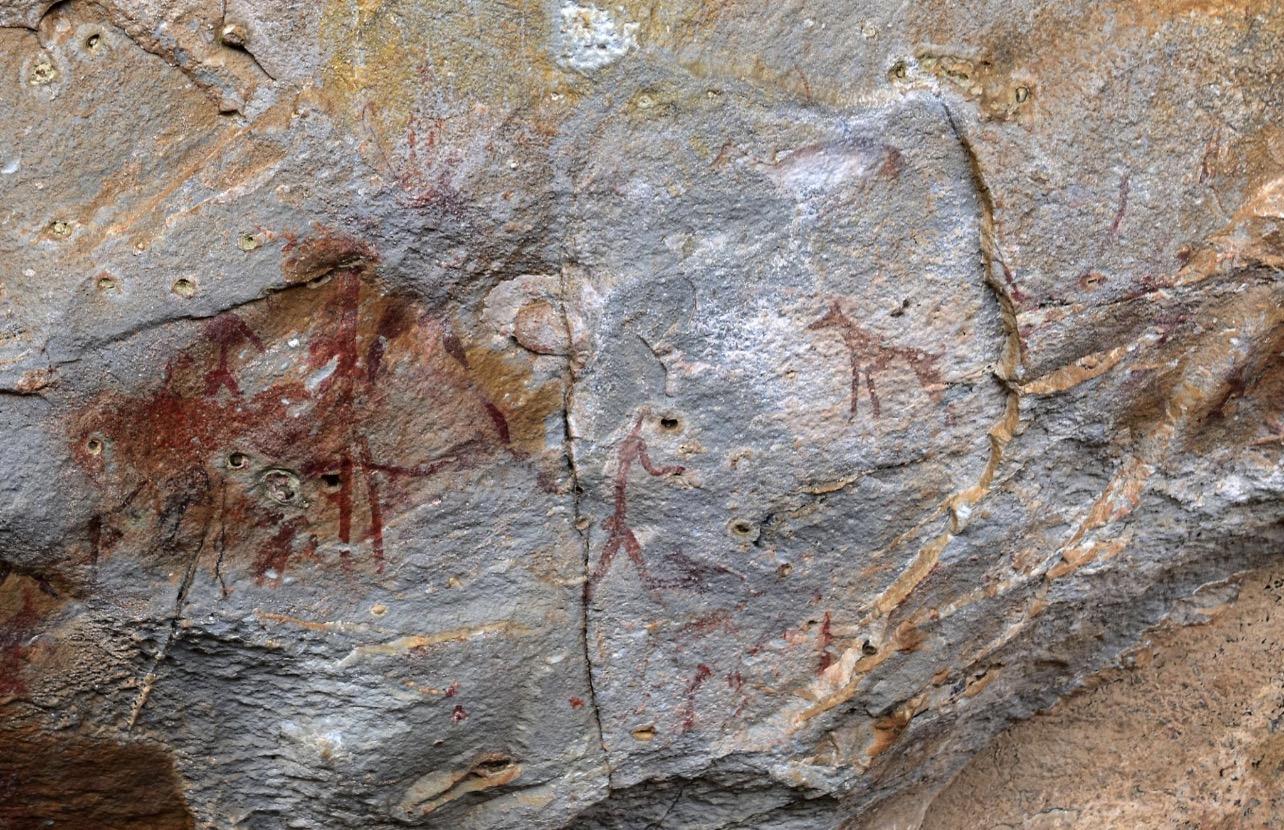
The Ancient Drakensberg San Rock Art High in the rugged mountains that stretch between modern day South Africa and Lesotho lies one of the most remarkable historical treasures in Africa. The Drakensberg Mountains are not only famous for their breathtaking cliffs, misty valleys, and dramatic peaks. Hidden within these rocks are thousands of ancient paintings that tell the story of a...
The Centre for the Promotion of Private Enterprise (CPPE) says Nigeria’s 3.98% GDP growth in Q3 2025 demonstrates a steady economic recovery driven by FX stability, moderating inflation, and rising investor confidence. Despite these gains, the centre warns that economic reforms continue to strain households, with cost-of-living pressures remaining a major concern. The non-oil sector...
The Child of a Hidden Bloodline My name is Aishat. I am twenty four years old now, living in Abuja where the city never truly sleeps. Cars hiss past my window at night like restless spirits, and sometimes when the traffic slows and the air becomes still, memories return without warning. When they do, my chest burns the way hot palm oil burns skin. Slowly. Deeply. Leaving scars...