Über
Über
Pascal Dozie Biography: The Economist Who Built Diamond Bank and Quietly Shaped Nigeria’s Boardrooms
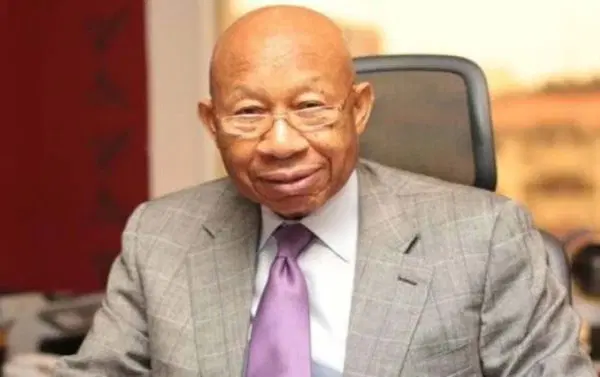
Pascal Gabriel Dozie was the kind of man whose power never needed noise. He didn’t look for the spotlight; he built the stage, reinforced the beams, and then stepped back to watch others perform. In Nigeria’s financial history, his name sits in that rare category of builders—people who didn’t just chase success for themselves, but created institutions that outlived their tenure.
He was born on April 9, 1939, in Egbu, Owerri (Imo State). From the beginning, his upbringing leaned heavily on discipline and faith—many profiles note his family background and strong Catholic roots.
The London years: where the “numbers” became a vision
As a young man, Dozie travelled to the United Kingdom to study. He attended the London School of Economics (LSE), and later studied at City University, London, where his training pushed beyond theory into systems, operations, and how organizations work.
Those years mattered because they shaped the lens he carried for the rest of his life: Nigeria was not short of talent—Nigeria was short of strong systems.
Before Diamond Bank: learning how economies breathe
Dozie’s early professional life took him into economics and consulting roles, including work in the UK and advisory roles connected to African development efforts.
He wasn’t building fame; he was building competence—learning how policy, markets, and institutions either lift people or trap them.
The Diamond Bank chapter: a calm man enters a hard arena
Then came the leap that defined him. In the early 1990s, he founded Diamond Bank—a decision that placed him in the stormy, competitive world of Nigerian banking.
He led the bank as CEO from the 1990s into the mid-2000s, and later handed leadership to his son, Uzoma Dozie.
People who watched that era often describe Diamond Bank’s personality as innovative and forward-looking—one of the banks that pushed technology and modern retail banking in its own style.
Even after Diamond Bank eventually merged into Access Bank years later (long after his CEO era), the institution he started remained a major character in Nigeria’s banking evolution.
The boardroom elder: influence beyond one bank
After stepping back from executive banking, Dozie became a “boardroom institution” in Nigeria:
-
He is widely described as a former President of the Nigerian Stock Exchange.
-
He served as a former Director of the Central Bank of Nigeria (as listed in several institutional bios).
-
He also became known as a former chairman associated with MTN Nigeria/MTN in public profiles and corporate governance references.
-
He was Chairman of Pan-Atlantic University (a key private higher education institution in Nigeria).
This phase is where his story becomes even clearer: he didn’t stop working—he simply changed tools. Instead of building with daily operations, he built through governance, oversight, and long-term strategy.
Final chapter: a legacy that stayed quiet, but stayed solid
Pascal Dozie died on April 8, 2025, one day before his 86th birthday, according to family statements reported by multiple Nigerian outlets.
In the end, his legacy is not just “founder of Diamond Bank.” It is the bigger idea behind that fact: that Nigeria can produce institution builders—men and women who think in decades, not headlines.

Kategorien
Mehr lesen
When people think of beautiful airports, they often imagine sleek terminals and glossy floors. But the true beauty of an airport lies far beyond the architecture—it’s in the experience it offers. From check-in to takeoff, what defines a world-class airport is efficiency, service, cleanliness, safety, and customer satisfaction. Unfortunately, many Nigerian airports fall short....
Muhammad Kudu Abubakar Introduction The story of Muhammad Kudu Abubakar is one of simplicity, growth, and quiet determination. It is not always the loudest voices that leave the deepest impact sometimes, it is the steady life of purpose that truly inspires. Early Life Muhammad Kudu Abubakar was born into a modest family where values were stronger than wealth. Growing up, life...
The association accused the Lagos State government of ignoring its plea to review the fee down to N2,500 per truck—an amount NARTO says reflects economic realities. Nigeria could face a fresh wave of fuel scarcity if a brewing standoff between the National Association of Road Transport Owners (NARTO) and the Lagos State Government isn’t resolved in the next 24 to 48 hours. NARTO has...

Nollywood actress Angela Okorie has reignited her feud with Regina Daniels, accusing Mercy Johnson of marrying someone else's husband. In a recent Instagram post, Angela reminded Nigerians of a past incident where a woman publicly pleaded for Mercy Johnson to leave her husband alone, questioning why people have forgotten about it. Angela's comments come amid ongoing tensions between her and...

Episode Two: Tongue Wars Slowly, we began to blend into where we found ourselves. But blending didn’t mean fitting in. We were children from Oyo State, and back home, we used to see people from Ilorin come to our area to sell iru. We would laugh at their accent, mimic the way they spoke Yoruba, and feel somehow superior like our Yoruba was the “original version.” Now life...