Sobre
Sobre
Jackie Chan: The Fearless Stunt Legend Who Turned Pain Into Global Fame
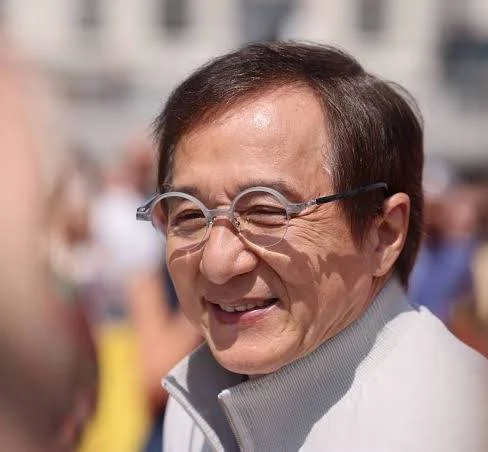
Jackie Chan
Jackie Chan is one of the most recognizable action stars in the world, a performer whose name became synonymous with breathtaking stunts, comic timing, and a relentless work ethic that reshaped martial arts cinema. Born Chan Kong sang on April 7, 1954 in Hong Kong, he grew from a poor child of political refugees into a global superstar whose influence stretches across continents. His life is not only a story of cinematic triumph but also of discipline, hardship, personal controversy, reinvention, and resilience.
Because he is still alive at the time of writing, there is no account of what happened before he died. Instead, what can be told in full is the long, complex journey of his life so far and the experiences that shaped him into a cultural icon.
Early life and family background
Jackie Chan was born in Victoria Peak, Hong Kong, to Charles and Lee Lee Chan. His parents had fled mainland China during the Chinese Civil War. They worked for the French ambassador in Hong Kong, and Jackie spent his early childhood in the ambassador’s residence.
He was energetic and mischievous as a child, which led his parents to enroll him at the China Drama Academy, a Peking Opera school run by Master Yu Jim Yuen. At the age of seven, Jackie entered a life of strict discipline that would define his physical and artistic foundation. Training lasted up to nineteen hours a day. Students practiced acrobatics, martial arts, singing, and acting. Punishments were harsh, and the environment demanded complete obedience.
Jackie became part of a performance group known as the Seven Little Fortunes. Among his classmates were future stars such as Sammo Hung and Yuen Biao. The bonds formed during those years would later influence Hong Kong cinema profoundly.
Life as a stuntman
After ten intense years at the academy, Jackie entered the film industry as a stuntman. He appeared in small roles and worked behind the scenes in martial arts films. In the early 1970s, he worked as a stunt double in films starring Bruce Lee, including Fist of Fury and Enter the Dragon. Observing Bruce Lee left a deep impression on him.
However, Jackie did not want to imitate Bruce Lee. After Lee’s death in 1973, many studios tried to create successors who copied his serious, intense persona. Jackie was briefly marketed under different names in attempts to replicate Lee’s style, but those films did not achieve major success.
Breakthrough and unique style
Jackie’s breakthrough came when he embraced a different direction. Rather than portraying an invincible martial arts master, he developed a persona that was comedic, vulnerable, and creative. He blended kung fu with slapstick humor inspired by silent film legends such as Charlie Chaplin and Buster Keaton.
In 1978, the film Snake in the Eagle’s Shadow brought him attention, but it was Drunken Master later that year that made him a star. In that film, he played a mischievous young man trained in a unique drunken boxing style. The film showcased his agility, timing, and willingness to endure real physical risk.
Unlike many action stars, Jackie insisted on performing his own stunts. This decision would become a hallmark of his career and a source of countless injuries.
The golden era in Hong Kong
The 1980s marked Jackie Chan’s golden era in Hong Kong cinema. Films such as Project A, Police Story, and Armour of God demonstrated his innovative stunt choreography. In Police Story, he slid down a pole covered in lights inside a shopping mall, an iconic stunt that required multiple takes and caused burns and injuries.
His dedication to realism often resulted in severe accidents. During the filming of Armour of God in 1986, he fell from a tree and suffered a skull fracture that required surgery. A metal plate was inserted into his head, and he nearly died. This injury became one of the most serious of his career.
Throughout his work, he formed the Jackie Chan Stunt Team, a group of performers who trained rigorously to execute complex action sequences. Together they redefined how action scenes were shot, emphasizing wide angles and minimal cuts to show authenticity.
Attempts to break into Hollywood
Jackie attempted to enter the American market in the early 1980s with films such as The Big Brawl and The Protector. These projects did not meet expectations. He felt that American studios did not fully understand his style and restricted his creative control.
Despite setbacks, he continued building his reputation in Asia and other international markets. Films such as Police Story 3 Supercop expanded his reach. In Supercop, actress Michelle Yeoh performed daring stunts alongside him, contributing to the film’s global appeal.
Hollywood success
Jackie’s major Hollywood breakthrough came in 1998 with Rush Hour, co starring Chris Tucker. The film was a commercial success and introduced him to a new generation of Western audiences. His chemistry with Tucker combined martial arts action with comedic dialogue.
Rush Hour was followed by sequels and other Hollywood projects such as Shanghai Noon and The Tuxedo. These films established him as a mainstream international star.
However, he sometimes expressed frustration that Hollywood roles limited the physical complexity of his stunts. In Hong Kong, he had full creative involvement in choreography and editing. In Hollywood, insurance regulations often restricted risk.
Injuries and physical toll
Jackie Chan’s body bears the marks of his career. He has broken fingers, ribs, toes, and cheekbones. He has suffered dislocated shoulders and internal injuries. In interviews, he has said there is hardly a part of his body that has not been hurt.
Yet he continued working at a pace that astonished fans. His outtakes, often shown during end credits, revealed the real pain behind the spectacle. Unlike polished illusions, his films showed genuine falls and mistakes.
Personal life and controversies
Jackie Chan married Joan Lin in 1982. The couple has one son, Jaycee Chan. For many years, Jackie kept his marriage relatively private to maintain his public image.
In 1999, Jackie admitted to having an extramarital affair with actress Elaine Ng. The relationship resulted in the birth of a daughter, Etta Ng. Jackie publicly acknowledged the affair as a mistake and apologized to his wife and son. However, his relationship with his daughter has been distant and controversial, with reports of estrangement.
In 2014, his son Jaycee was arrested in Beijing for drug related charges. Jackie publicly expressed disappointment and took responsibility as a father. The incident was widely covered in Chinese media.
Political stance and criticism
Jackie Chan has also faced criticism for his political views. He has made comments supporting certain positions aligned with the Chinese government. Some statements about freedom and discipline sparked debate among fans, particularly in Hong Kong and Taiwan.
Despite controversies, he remains highly respected in mainland China and continues to work on large scale productions.
Awards and recognition
Jackie Chan has received numerous awards throughout his career. In 2016, he was honored with an Academy Honorary Award recognizing his lifetime achievements in film. The award acknowledged his decades of innovation and influence in action cinema.
He has also been recognized by governments and film festivals around the world. His name appears on the Hollywood Walk of Fame.
Philanthropy
Beyond cinema, Jackie Chan has been active in philanthropy. He established the Jackie Chan Charitable Foundation and the Dragon’s Heart Foundation, supporting education and disaster relief efforts. He has donated millions to various causes and has been involved in UNICEF activities.
Evolution in later years
As he aged, Jackie gradually shifted from high risk stunts to more character driven roles. Films such as The Karate Kid remake in 2010 showed a more serious side of his acting ability. He demonstrated emotional depth beyond action and comedy.
He has continued working in both Chinese and international projects, adapting to changes in the global film industry.
Legacy
Jackie Chan’s legacy is immense. He transformed martial arts cinema by combining comedy with acrobatics. He influenced generations of actors and stunt performers. Hollywood action films adopted techniques pioneered by his team.
He stands as a bridge between Eastern and Western cinema. Few performers have achieved comparable cross cultural recognition.
Current status
At the time of writing, Jackie Chan is alive. He remains active in film production and public life.
From a disciplined child in the China Drama Academy to a global cinematic icon, Jackie Chan’s life reflects relentless effort, resilience after injury, creative risk taking, personal imperfection, and lasting impact.
His biography is not a closed chapter but an ongoing story shaped by decades of dedication and reinvention.

Categorias
Leia Mais
The United Nations Security Council has rejected a resolution by Russia and China that sought to extend sanctions relief for Iran’s nuclear program, setting the stage for the automatic reimposition of sanctions under the “snapback” mechanism of the 2015 nuclear deal. The vote, held just before the deadline, ended with only four countries in favor, nine against, and two...

Air Peace has officially responded to explosive allegations made by Senator Adams Oshiomhole, who claimed he was extorted by the airline’s staff at the Murtala Muhammed Airport in Lagos. In a bold statement released today, the airline challenged Oshiomhole to provide CCTV footage and evidence of the incident, stating that it operates with “zero tolerance for corruption and unethical...

Illbliss Illbliss did not chase trends. He did not bend easily to industry pressure. He built his brand slowly, deliberately, and strategically. In a Nigerian music industry often dominated by fast rising pop stars and viral sensations, Illbliss carved a different path. He became a voice of Eastern Nigerian hip hop, a respected lyricist, a label executive, and a cultural architect. But...
Aiyegunle The first time the strangers came, no one in the village of Aiyegunle thought much of it, because visitors were not new, traders had passed before, missionaries had come with books and strange songs, and even wanderers had rested under the old iroko tree, but these men were different, their boots were too heavy for the soft earth, their eyes too cold for a place that had...
Sheikh Kamaldeen Early Life and Background Sheikh Kamaldeen was born in Nigeria into a deeply religious Muslim family. From a young age, he was surrounded by Islamic teachings, discipline, and strong moral values. His parents were known in their community for their devotion to Islam, and this shaped the foundation of his life. As a child, Kamaldeen showed unusual interest in learning the...