About
About
Haruna Ishola Biography: The Life, Music, Legacy and Death of the Apala Legend

Alhaji Haruna Ishola Bello was one of the towering names in Yoruba music and a central architect of the sound the world now recognizes as apala. To many listeners he was more than an entertainer. He was a moving archive of Yoruba language, proverb, praise poetry, street philosophy, Islamic devotion, and the social life of the decades that shaped modern Nigeria. Even people who never met him often speak of him as if they did, because his voice sat inside their homes through records, radios, parties, naming ceremonies, club nights, and long overnight celebrations. By the time he died, he had become a reference point: when apala was mentioned, his name was usually the first that followed.
What makes Haruna Ishola’s life worth telling in full is not only the fame he achieved, but the way he achieved it. His story carries the long arc of a working artist who started from the old touring tradition, survived the harsh economics of the record business, built a label when artists were often at the mercy of middlemen, and fought for ownership and credit in court. His life also reflects the Yoruba musical world before the age of digital promotion, when the true measure of a singer was how long he could hold a crowd, how deeply he could weave praise names into rhythm, and how convincingly he could turn everyday events into memorable lines that people repeated for years.
Birth, roots, and the world that shaped him
Most sources agree he was born in 1919 and belonged to the Yoruba cultural space that produced many of Nigeria’s most influential popular styles. Some biographies place his origin strongly in Ijebu Igbo in present day Ogun State, even down to specific quarters or communities, while some accounts emphasize Ibadan as his birthplace or as the city most associated with him in the wider Nigerian imagination. Wikipedia summarizes him as Haruna Ishola Bello, born 1919, and notes Ibadan in relation to his birth, while also connecting him to Ijebu Igbo through his earliest famous recording and later references.
This kind of location overlap is common with musicians of his era because identity was often expressed through hometown, family origins, residence, and the circuits of performance rather than a single neat line on a modern form. What is clearer is that he rose from a Yoruba environment where music was not only entertainment but a social tool. In that world a singer could bless, mock, warn, praise, advise, or reconcile, all inside one performance. The best singers were expected to be intelligent with language, quick with memory, and fearless with social commentary, while still maintaining the discipline to respect elders and patrons.
Haruna Ishola grew into this tradition and developed a reputation for a strong traditionalist approach. He drew heavily from Yoruba proverbs and also from Islamic references, blending moral instruction with praise singing in a style that felt both earthy and spiritually grounded.
Finding a voice and building an apala identity
Apala itself has older roots, but Haruna Ishola became one of the major figures who expanded and popularized it, so much that many later listeners casually described him as the father of apala. Part of that reputation came from his insistence on keeping the music rooted in Yoruba percussion and vocal structure rather than relying on Western instruments. The sound world around him was built from talking drums and supporting percussion, with the agidigbo, a hollow lamellophone, sitting at the center as a hypnotic anchor that held the groove while the singer traveled freely across lines of praise and story.
Accounts of his early recording career often begin with his first major record in 1948. Wikipedia describes his first album as Late Oba Adeboye, tied to the Orimolusi of Ijebu Igbo, released under His Master’s Voice, and notes that the first release struggled commercially, even though his persistent touring helped build his reputation among wealthy patrons and party circuits. The same source describes a rerecorded version being released in 1955, after the death of Oba Adeboye, which helped raise his profile.
Those details matter because they show the rhythm of a career before the modern era. Records helped, but the true engine of growth was performance. A musician could lose money on a recording and still become famous by being the one people insisted on hiring when a family wanted prestige at an event. Haruna Ishola became known as a performer who could control a crowd for hours, and that stamina became part of his legend.
Apple Music’s editorial biography, drawing on the perspective of later music historians and catalog writers, describes him as an influential singer in Yoruba music, notes his emotionally rich baritone, and emphasizes that he was known for extremely lengthy shows that could run from four to ten hours. This single detail tells you a lot. It means he was not only singing songs the way a short modern concert does. He was guiding a whole social occasion, adjusting tempo, inserting praise names for dignitaries, responding to the mood of the room, and sustaining the collective energy until dawn if necessary.
The discipline of style, instruments, and performance method
Haruna Ishola’s apala was not just music, it was an arrangement philosophy. Wikipedia describes his performance posture, often seated, surrounded by talking drummers, agogo bells, akuba style drums, shakers, claves, chorus singers, and the central agidigbo. That arrangement mattered because it created a tight rhythmic cage inside which the singer could improvise lines and stretch phrases. In apala the singer’s timing is everything. You can delay a line, arrive late, land unexpectedly, or ride above the drum conversation. The best apala singers sound like they are speaking and singing at the same time, and that effect demands both confidence and deep familiarity with the rhythmic language of Yoruba percussion.
Haruna Ishola also became known for weaving together history, praise, moral instruction, and contemporary commentary. Apple Music’s profile highlights his large repertoire of historic tales and philosophical explorations, describing a catalog that extended across decades and dozens of releases.
Records, labels, and the fight for ownership
If Haruna Ishola’s musical power built his fame, his business battles reveal another side of his life: the side that understood that legacy without ownership can become exploitation.
A key part of his story is his movement from being an artist inside other people’s structures to becoming someone who helped create structures for artists. Wikipedia notes that in 1969 he started STAR Records Ltd in partnership with the juju musician I K Dairo, and presents this as a significant landmark in African music business history, describing it as the first African record label owned by its artists.
Whether one frames it as the first or among the earliest major artist owned labels, the point remains: he was thinking beyond performance into control of production and distribution. That shift matters because artists of that era often lost royalties through opaque accounting and the power of record marketers and distributors.
Wikipedia also preserves a detailed account of a major business conflict that became a landmark legal case. It describes how he entered a partnership in 1964 with Nurudeen Omotayo Alowonle and others under a trade name and how disputes over profits, alleged embezzlement, and later use of the partnership name led to court action. The account describes the partnership dissolution in 1967 and later legal judgments that prevented the former partner from using the name alone and ordered financial accountability.
This is not gossip. This is part of the historic record of how Yoruba popular music moved from informal touring economies to formal commercial systems. Haruna Ishola was one of the artists who discovered, like many before and after him, that success could create new enemies and new temptations around money. The fact that he fought it in court, rather than simply complaining in private, is one reason his business story still gets discussed.
Peak popularity and the Oroki Social Club era
Every generation of Nigerian music has albums that become cultural monuments. For Haruna Ishola, one of the biggest monuments was Oroki Social Club.
Wikipedia states that in 1971 he released Oroki Social Club on Decca Records and that it sold over five million copies. Apple Music likewise highlights Oroki Social Club, Osogbo, released in 1971, and also describes sales of more than five million copies across the period up to 1983.
The title track is often explained as an ode to a prestigious nightclub in Osogbo, a place where he and his group performed to packed audiences, sometimes for the marathon hours already associated with him. The importance of this era is that it shows apala not as a rural or strictly ceremonial form, but as a dominant urban entertainment force that could fill clubs and travel between cities on the strength of demand.
International travel and the widening of Yoruba music’s map
Haruna Ishola’s influence did not remain inside Nigeria. Wikipedia describes him as one of the early Nigerian musicians to tour abroad, listing performances in Benin and in parts of Europe including the United Kingdom, Sweden, France, West Germany, and Italy. For a musician rooted in traditional percussion and Yoruba language, this kind of travel was not a casual accomplishment. It suggests that the charisma of apala rhythm and the emotional force of his singing could connect across language barriers, especially among African and diaspora communities, and among curious global audiences hungry for authentic African popular forms.
National recognition and the M O N honor
By the early 1980s, Haruna Ishola had become more than a star. He had become an institution. Pan African Music’s profile notes that he received the national honor Member of the Order of the Niger in 1981, describing it as recognition of his achievements. Wikipedia also includes the M O N designation beside his name.
PAM | Pan African Music
This recognition matters because it shows the level of respect he commanded at a national level, not only within Yoruba speaking communities. In an era when popular musicians were sometimes viewed as mere entertainers, a national honor signaled cultural significance.
Rivalries, respect, and the apala ecosystem
No major music scene is without rivalry. Haruna Ishola’s rise happened in a competitive apala world. Pan African Music notes that he was rivalled by other apala acts and mentions that another name that reached towering heights and vied with him was Ayinla Omowura, with references to feuding before later acknowledgment of superiority.
PAM | Pan African Music
Rivalry in Yoruba music was often partly artistic, partly commercial, and partly social, because patrons, marketers, and city loyalties could shape who got booked and who sold more records. Rivalry also created creative pressure. A singer had to keep writing, keep refining, keep innovating in praise poetry, and keep proving himself in live performance where the public could judge instantly.
Family life and the human story behind the legend
Haruna Ishola’s personal life is harder to map in complete detail because he lived in an era when musicians were not constantly interviewed on television in the way modern celebrities are. Still, some important facts appear in later interviews with family members.
In a 2021 interview with Punch Newspapers, his son Musiliu Haruna Ishola describes him as a major influence and states that his father had about 22 children. In that same interview, the son gives a specific date for his father’s death, saying he died on November 9, 1983.
Punch Newspapers
That single line opens a window. It tells you Haruna Ishola was a patriarch of a very large household, and it hints at the weight of responsibility that sat alongside fame. A musician with that many children could not treat music as a hobby. Music was family survival, reputation, and future.
It also hints at why he was protective about legacy and why he would insist on training a successor inside the family line. In the same Punch interview, the son explains that he stopped schooling after his father’s death and that he had worked as his father’s driver and manager, learning the music closely through daily proximity. Whether every detail of that family training is known publicly or not, the broad picture is clear: Haruna Ishola’s household was intertwined with his music business.
Punch Newspapers
The final years and what happened before he died
When people ask what happened before Haruna Ishola died, they usually mean two things. They mean what his career looked like near the end, and they mean the immediate circumstances of his death.
On the career side, the evidence suggests that he remained productive and respected through the late 1970s and early 1980s. He had built recording structures, maintained a powerful band identity, and held prestige strong enough to earn national honors. The apala scene itself was still significant, even though Nigeria’s musical landscape was changing, with juju, fuji, and later pop currents shifting public attention in different directions. Pan African Music frames him as widely acknowledged as a pioneer who continued to flourish until his death in 1983.
On the immediate circumstances of his death, the most reliable public, attributable statement available in the sources above is the date given by his son in a major newspaper interview: November 9, 1983.
You may also see other dates in circulation. Wikipedia displays a life span ending July 23, 1983, but confusingly also contains a line stating he died in 1982, which contradicts both the July 1983 date and the November 1983 date given by his son. This is a good example of why biographies of older Nigerian musicians must be handled carefully. Dates and places sometimes get copied wrongly across databases.
As for the cause of death, many social media posts repeat a dramatic claim that he died from a cerebral hemorrhage after being struck on the head with a beer mug and that someone was taken to court. However, this story is very widely documented in relation to the death of Ayinla Omowura, not Haruna Ishola. Even Wikipedia’s Ayinla Omowura page includes that specific description with the name Bayewu as the person who struck him, and that is the version that appears repeatedly across the internet. Because this claim is tied so strongly to Omowura’s documented death narrative, and because the Punch interview that gives Haruna Ishola’s death date does not support the beer mug story for Haruna Ishola, it would be irresponsible to state that as a confirmed fact about Haruna Ishola.
So what can be said honestly without hiding anything is this: the public record accessible in major profiles and reputable interviews clearly supports that Haruna Ishola died in 1983, with a specific date of November 9, 1983 given by his son, while some secondary databases show conflicting dates. The sensational head injury story circulates online but appears to be a misapplied narrative from Ayinla Omowura’s death rather than a verified account of Haruna Ishola’s final moments.
Legacy, influence, and the living echo of his work
Even after his death, Haruna Ishola’s voice remained active in Nigerian cultural life because recordings do not die. His catalog continues to be referenced in reissues, compilations, and streaming service biographies. Apple Music describes him as one of the most influential Yoruba singers and emphasizes his distinctive instrumentation and vocal power. Wikipedia emphasizes how his recordings endure on major labels and through the structures he built.
His influence is also visible through lineage. His son Musiliu Haruna Ishola became a prominent musician in his own right, explicitly presenting himself as a continuation of the family’s apala inheritance. That continuity matters because it reinforces the idea that Haruna Ishola did not only build personal fame. He built a tradition strong enough to survive him.
His larger impact can be described in three layers.
First is musical structure. The way apala instruments interact, the central role of agidigbo, the seated performance posture, and the choir responses are part of a classic template he helped popularize.
Second is lyrical authority. He demonstrated that Yoruba popular music could be deeply intellectual without losing mass appeal, because proverbs, history, and spiritual references could still make people dance when delivered with conviction.
Third is business example. By creating artist controlled structures and by fighting for rights and names in court, he became an early model of an African musician who understood that creativity and commerce must be managed together if a legacy is to last.
To write Haruna Ishola as only a singer would be to shrink him. He was a cultural worker who carried Yoruba social memory into modern formats. He was also a businessman who refused to be erased from his own success. He navigated rivalries, performed marathon shows, recorded prolifically, and earned recognition at a national level. He raised a very large family, and his death in 1983 closed an era while leaving behind an enduring archive.
And perhaps the deepest proof of his greatness is this: decades later, when people talk about apala with seriousness, they still return to Haruna Ishola as a standard. They use his name to measure discipline, vocal power, lyrical depth, and the ability to turn a Yoruba night into a long living story that nobody wants to end.

Categories
Read More
In the little town of Willowbrook, life moved slowly, like a river winding lazily through the trees. The townspeople knew one another by name; they shared stories over fences, exchanged smiles at the market, and often gathered at the old clock tower to watch the sun dip below the horizon. Yet, among them all, there was one boy who stood out not for his looks or his intelligence, but for his...

Toyin Adegbola Toyin Adegbola is a Nigerian actress, film producer, and evangelist. She is widely known for her roles in Yoruba Nollywood movies and is popularly called “Toyin Asewo To Re Mecca.” Early Life and Background Toyin Adegbola was born on December 28, 1961, in Osun State, Nigeria. She grew up in a traditional Yoruba environment where culture and storytelling...

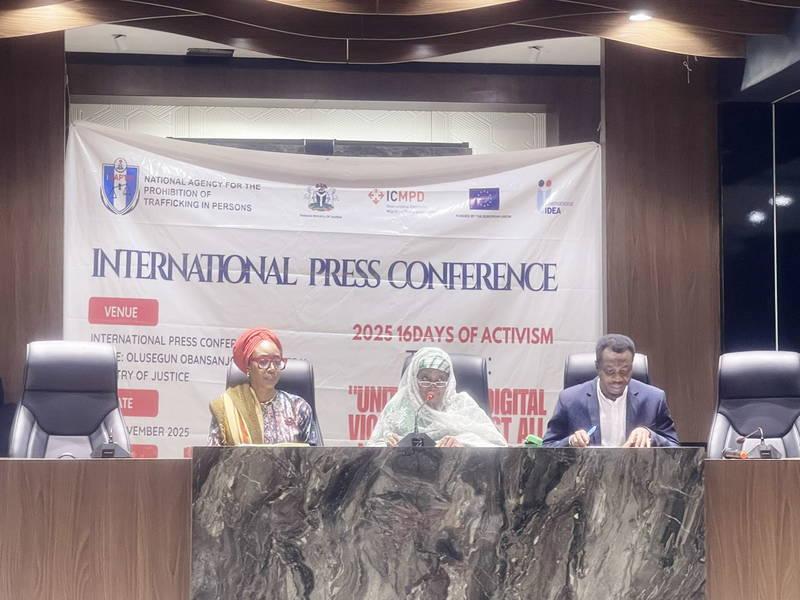
The National Agency for the Prohibition of Trafficking in Persons (NAPTIP) has warned that rising insecurity across Nigeria is fueling a disturbing increase in sexual and gender-based violence (SGBV). Speaking during the launch of the 2025 16 Days of Activism campaign in Abuja, NAPTIP Director-General Mrs. Binta Adamu Bello said insecurity-induced displacement is exposing more women...
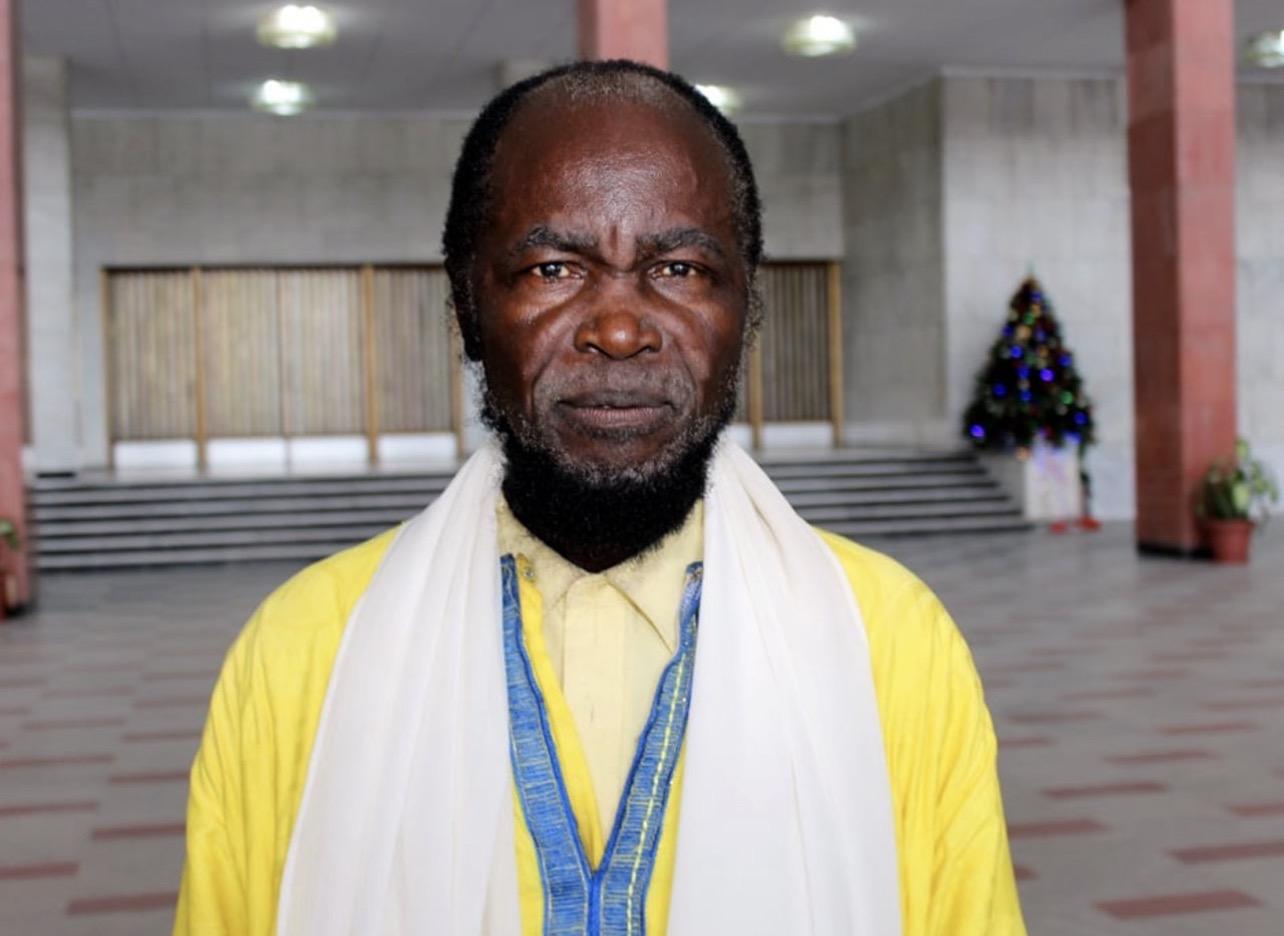
Ne Muanda Nsemi Early Life Ne Muanda Nsemi was born on September 1, 1946, in the Kongo Central region of the Democratic Republic of Congo. His birth name was Zacharie Badiengila. He grew up in a traditional Kongo environment where history, spirituality, and cultural identity were deeply respected. From a young age, he showed strong intelligence and curiosity. He listened to elders...
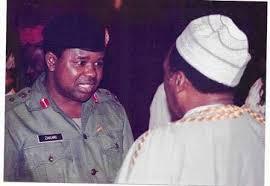
Danladi Mohammed Zakari Danladi Mohammed Zakari is a Nigerian military officer best known as the first Military Administrator of Kogi State after the state was created in August 1991. He became an important historical figure in Kogi because he led the state during its earliest foundation period before handing over to the first elected civilian governor, Abubakar Audu, at the start of the Third...