


Charles Oputa; Nigerian Singer, Songwriter and Tv Show Host
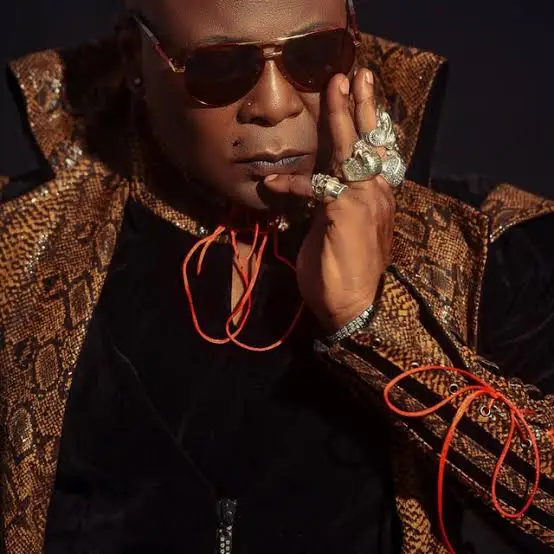
Charly Boy
Charles Oputa, widely known as Charly Boy (also stylized as Charlie Boy or Area Fada), is a Nigerian singer, television presenter, actor, and outspoken social activist. He is celebrated not only for his contributions to Nigeria’s entertainment industry but also for his fearless activism, countercultural image, and advocacy for social justice and good governance.
Early Life and Background
Charly Boy was born on June 19, 1951, in Lagos State, Nigeria, into a prominent family. He is the son of the late Justice Chukwudifu Oputa, a respected jurist and former Supreme Court Justice of Nigeria. Growing up in a disciplined and intellectually rich environment, Charly Boy was exposed early to debates around justice, responsibility, and national conscience values that would later shape his activism.
He attended Government College, Ibadan, one of Nigeria’s most prestigious secondary schools, before proceeding to higher education in the United States, where he studied communications. His time abroad broadened his worldview and influenced his unconventional approach to art and public life.
Music and Entertainment Career
Charly Boy began his music career in the 1980s, carving a niche for himself with a rebellious sound and persona that stood apart from mainstream Nigerian pop. His music often blended rock, funk, reggae, and Afrobeat, paired with provocative lyrics that challenged societal norms. Songs like “Areafada” and “Nwata Miss” established him as a counterculture icon.
Beyond music, he became a household name through television. He created and hosted “The Charly Boy Show,” a bold, youth-oriented talk show that addressed taboo topics such as sexuality, corruption, and mental health—subjects rarely discussed openly on Nigerian TV at the time. The show cemented his reputation as a fearless voice willing to confront hypocrisy and social injustice.
Activism and Public Advocacy
Perhaps more than his entertainment career, Charly Boy is renowned for his activism. He has consistently used his platform to speak against bad governance, police brutality, corruption, and human rights abuses. He is a leading figure in Nigeria’s civil society space and has participated in numerous protests and campaigns.
He played a visible role in the “Our Mumu Don Do” movement, which demanded accountability from political leaders and the return of abducted schoolgirls. Charly Boy’s activism has often come at personal cost—he has faced arrests, intimidation, and public backlash but he remains unapologetically vocal.
Personal Life
Charly Boy is married to Diane Oputa, an African-American singer and businesswoman. Their interracial marriage has lasted decades and is often cited as an example of resilience and mutual respect. Together, they have children and grandchildren, and Charly Boy frequently speaks about family values, love, and loyalty.
Despite his tough public image, he has openly shared personal struggles, including health challenges such as prostate cancer, which he survived. By speaking publicly about his illness, he helped raise awareness about men’s health issues in Nigeria.
Legacy and Influence
Charly Boy’s legacy lies in his nonconformity. He redefined what it meant to be an entertainer in Nigeria proving that art can be political, disruptive, and socially relevant. Younger generations of activists and creatives often cite him as a pioneer who dared to challenge authority and cultural silence.
Known affectionately as “Area Fada” (Father of the Streets), Charly Boy remains a symbol of resistance, authenticity, and courage. Whether through music, television, or street protests, his life reflects a deep commitment to speaking truth to power and inspiring Nigerians to demand a better society.


Категории
Больше
The United States has unveiled a 20-point peace roadmap aimed at ending the war in Gaza and setting a path toward lasting stability between Israelis and Palestinians. Here’s what the plan actually includes 👇 🕊️ Phase 1: Ceasefire & Hostage Release A full ceasefire begins, followed by phased hostage and prisoner exchanges. Israeli military operations would pause while...
Maintaining proper nutrition is a key factor in ensuring pets stay healthy and energetic. The Intelligent Pet Food Dispenser from Pawtechpet provides a smart and reliable way to manage pet feeding routines effectively. Combining technology with user-friendly design, this device helps pet owners automate feeding times and regulate food portions with ease, making it suitable for all kinds of...

They had called him One Kobo long before politics ever found him.Not because he was useless, but because life never gave him enough. From childhood, he learned a hard truth early: survival was about taking whatever came your way, no matter how small. One kobo today was better than the promise of tomorrow. He grew up in the backstreets, where hunger was familiar and hope was something people...
the Mississippi River The Mississippi River is one of the most important rivers in the world and the second-longest river in North America. Stretching about 2,340 miles (3,770 km), it flows from Lake Itasca in Minnesota down to the Gulf of Mexico. For thousands of years, it has shaped civilizations, powered economies, inspired writers, and defined American history. Ancient Beginnings...

While no nation perfectly follows every Qur’anic teaching, some Muslim-majority countries have made remarkable progress in aligning their governance, social values, and national priorities with Islamic principles such as justice, compassion, and peace. Here are ten countries that stand out for promoting Qur’an-inspired values in today’s world: 1. Malaysia 🇲🇾...