About
About
Muhammad Ali: Biography The Greatest Who Fought in the Ring, Defied a Nation, and Changed the World
Muhammad Ali: Biography The Fighter Who Shook the World
Introduction
Muhammad Ali was not just a heavyweight champion. He was a cultural force, a political voice, a symbol of pride, resistance, faith, controversy, and resilience. His fists won titles, but his words reshaped conversations about race, religion, war, and identity in America and around the world.
Born as Cassius Marcellus Clay Jr, he became Muhammad Ali after embracing Islam. He dazzled crowds with speed and confidence, angered critics with defiance, and inspired millions with courage. He lost years of his prime because he refused to fight in the Vietnam War. He regained his title in epic battles that defined an era. He later endured decades of illness with dignity.
This is a full and deep biography of Muhammad Ali, including his early life, rise to fame, conversion to Islam, political stand, career triumphs and defeats, personal struggles, and the events leading up to his death.
Early Life in Louisville
Muhammad Ali was born Cassius Marcellus Clay Jr on January 17 1942 in Louisville Kentucky. His father, Cassius Marcellus Clay Sr, was a sign painter. His mother, Odessa Grady Clay, worked as a domestic worker. They were a working class African American family living in a segregated South.
Growing up in Louisville, young Cassius experienced racism and discrimination. Segregation shaped daily life. He later recalled being denied service at restaurants and feeling the sting of inequality.
At age twelve, his bicycle was stolen. Furious and determined to find the thief, he reported it to a local police officer named Joe Martin. Martin happened to train young boxers. When Cassius told him he wanted to beat up whoever stole his bike, Martin suggested he learn how to fight first.
That moment changed his life.
Amateur Career and Olympic Gold
Cassius quickly developed into a disciplined and driven boxer. He trained intensely and showed natural speed and reflexes.
He won multiple Golden Gloves tournaments and became a standout amateur. In 1960 he earned a spot on the United States Olympic boxing team.
At the Rome Olympics in 1960, Cassius Clay won the gold medal in the light heavyweight division. His victory brought him national attention.
There is a popular story that after returning home he threw his gold medal into the Ohio River because of racist treatment in Louisville. Historians debate the accuracy of that specific event, but what is certain is that the racism he faced deeply influenced his later views.
Turning Professional and Rise to Fame
After the Olympics, Clay turned professional under the management of a group of investors known as the Louisville Sponsoring Group.
From the beginning, he was different. He predicted rounds, taunted opponents, and spoke in rhymes. Some fans loved his confidence. Others called it arrogance.
He climbed the ranks quickly, defeating experienced fighters with speed and precision.
Fight with Sonny Liston
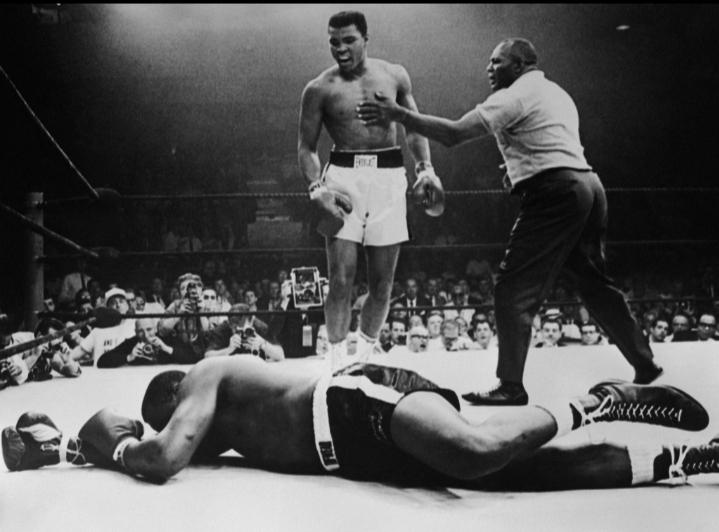
In 1964 Clay faced heavyweight champion Sonny Liston. Liston was heavily favored. He was powerful, intimidating, and considered nearly unbeatable.
Clay shocked the world. He outmaneuvered Liston with speed and intelligence. Liston failed to come out for the seventh round.
At just twenty two years old, Cassius Clay became heavyweight champion of the world.
He famously declared, I am the greatest.
Conversion to Islam and Name Change
Shortly after defeating Liston, Clay announced his membership in the Nation of Islam. He changed his name to Muhammad Ali, a name given by Elijah Muhammad.
Many Americans reacted negatively. Some sports journalists refused to use his new name. But Ali insisted that Cassius Clay was a slave name and that Muhammad Ali represented his true identity.
His friendship with Malcolm X influenced his thinking during this period. However, when Malcolm X later broke from the Nation of Islam, Ali distanced himself, a decision he later expressed regret about.
Vietnam War and Draft Refusal
In 1967 Ali was drafted into the United States Army during the Vietnam War.
He refused induction, stating that he had no quarrel with the Viet Cong and that his religious beliefs forbade participation.
His words became iconic. He said that no Viet Cong ever called him a racial slur.
As a result, Ali was stripped of his heavyweight title, banned from boxing, and sentenced to prison for draft evasion. He remained free on appeal but lost nearly four years of his boxing prime.
The United States Supreme Court eventually overturned his conviction in 1971.
During these years, Ali became a symbol of resistance and conscience. He traveled, spoke on college campuses, and faced both admiration and hostility.
Return to Boxing
After his legal victory, Ali returned to the ring.
In 1971 he fought Joe Frazier in what was billed as the Fight of the Century. Frazier won after fifteen grueling rounds.
Ali suffered his first professional loss but did not lose his confidence.
Rumble in the Jungle
In 1974 Ali fought George Foreman in Zaire, now the Democratic Republic of Congo.
Foreman was younger and stronger. Many believed Ali would be knocked out.
Ali introduced a strategy known as rope a dope. He leaned against the ropes, absorbed punches, and waited for Foreman to tire.
In the eighth round, Ali knocked Foreman out and regained the heavyweight title.
The Rumble in the Jungle became one of the most famous fights in history.
Thrilla in Manila
In 1975 Ali faced Joe Frazier again in Manila in extreme heat.
The fight lasted fourteen brutal rounds. Frazier’s corner stopped the fight before the fifteenth round. Ali later described it as the closest thing to dying he had ever experienced.
The rivalry between Ali and Frazier was intense and personal, sometimes crossing into hurtful territory.
Later Career and Decline
Ali continued boxing into the late 1970s. In 1978 he lost his title to Leon Spinks but regained it later that year, becoming a three time heavyweight champion.
His later fights showed signs of decline. His reflexes slowed. He absorbed more punishment.
In 1980 he fought Larry Holmes, a former sparring partner. Ali was clearly past his prime and lost badly.
His final fight in 1981 ended in defeat. He retired from boxing.
Personal Life
Ali was married four times and had nine children.
His marriages included relationships with Sonji Roi, Belinda Boyd who later took the name Khalilah, Veronica Porsche, and Lonnie Williams, who remained with him until his death.
His personal life included infidelity and complex family dynamics. His fame and travel placed strain on relationships.
Parkinson’s Disease
In 1984 Ali was diagnosed with Parkinson’s syndrome, likely related to years of head trauma from boxing.
The disease gradually slowed his speech and movement.
Despite physical decline, he remained a global ambassador of goodwill.
Humanitarian Work
Ali devoted time to charity and humanitarian causes.
He traveled internationally promoting peace and understanding.
In 1996 he lit the Olympic torch at the Atlanta Games. The moment moved millions as his trembling hands raised the flame.
Final Years and Death
In his later years, Ali’s health continued to decline.
On June 3 2016, Muhammad Ali died at age seventy four in Scottsdale Arizona due to septic shock following respiratory complications.
His funeral in Louisville drew global attention. Leaders and admirers honored him not just as a boxer but as a man who stood for conviction and dignity.
Legacy
Muhammad Ali changed sports, politics, and culture.
He combined athletic brilliance with moral courage.
He lost titles but gained respect.
He endured illness but remained dignified.
He declared himself the greatest long before others agreed.
And history proved that in more ways than boxing, he was right.


Categories
Read More
Fresh controversy is brewing in Nigeria’s downstream oil sector as some fuel importers and marketers accuse the Dangote Refinery of selling petrol at cheaper rates to international buyers than to local marketers. According to Sunday PUNCH, the Depot and Petroleum Product Marketers Association of Nigeria (DAPPMAN) and the Petroleum Products Retail Outlet Owners Association of Nigeria...

Tony Elumelu is one of Africa’s most influential business leaders, investors, and philanthropists. Widely respected for his vision of African economic transformation, he is best known for promoting Africapitalism, a philosophy that emphasizes the private sector’s role in driving long term economic development and prosperity across Africa. Early Life and Education Tony Onyemaechi...
The legal spotlight remains firmly on CBEX Global, the embattled cryptocurrency exchange at the center of a $1 billion fraud investigation. Following the arrest and detention of several CBEX operators, a federal high court is set to rule on their bail application on June 30, 2025. The accused are facing serious allegations tied to large-scale financial fraud, illicit crypto transactions, and...

Barrister: The Fuji Revolutionary Who Turned Were into a Movement Introduction Sikiru Ayinde Barrister, widely known simply as Barrister, was the man who formally named and shaped fuji music into a recognized genre. Long before fuji became a dominant force in southwestern Nigeria and beyond, it existed as Islamic devotional chanting known as were. Barrister transformed it, modernized it,...
Erica Nlewedim Erica Nlewedim is a Nigerian actress, model, entrepreneur, and reality television personality. She became widely popular after participating in the reality TV show Big Brother Naija. Early Life and Background Erica whose full name is Ngozi Erica Nlewedim was born on March 13, 1994, in Lagos State, Nigeria. She is originally from Abia State in southeastern Nigeria. She...