About
About
Bruce Lee: The Dragon Who Redefined Strength and Died Too Young
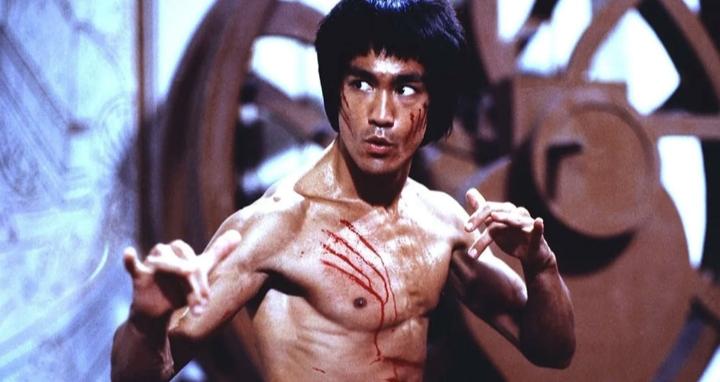
Bruce Lee: The Dragon Who Redefined Strength and Died Too Young
Introduction
Bruce Lee was more than a martial artist and more than a movie star. He was a cultural bridge between East and West, a philosopher of movement, a relentless self improver, and a man whose short life left a permanent mark on global cinema and martial arts. His intensity was legendary. His discipline was extreme. His charisma was undeniable. His death at the age of thirty two shocked the world and turned him into a mythic figure.
Behind the myth was a complex human being who struggled with identity, racism, injury, ambition, and the pressure of fame. His life story moves from Hong Kong streets to American universities, from television rejection to international superstardom, and finally to a mysterious death that continues to provoke discussion decades later.
This is a full and deep account of his life, his evolution, his triumphs, his controversies, and the events leading up to his final day.
Birth and Early Years
Bruce Lee was born on November 27 1940 in San Francisco. (en.wikipedia.org�) His birth name was Lee Jun fan. His father was Lee Hoi-chuen, a famous Cantonese opera performer, and his mother was Grace Ho, who came from a prominent Hong Kong family with Eurasian heritage.
Although born in the United States, Bruce was raised primarily in Hong Kong. He grew up during the Japanese occupation and in the chaotic post war years. As a child, he appeared in several films because of his father’s connections in the entertainment industry. Acting was part of his life from an early age.
But he was not a quiet or obedient child. As a teenager, Bruce became involved in street fights. Hong Kong in the 1950s was full of youth gangs and territorial rivalries. Bruce’s quick temper and pride often drew him into conflict. His parents became worried that he would either be seriously injured or arrested.
To channel his aggression and give him discipline, his father arranged for him to study martial arts under Ip Man, a master of the Wing Chun style. Under Ip Man, Bruce learned principles of efficiency, directness, and centerline control. These ideas later shaped his own philosophy of combat.
Departure to America
By 1959 Bruce’s street fighting had escalated to a point where his parents feared legal consequences. They decided to send him back to the United States, where he held citizenship because of his birth in San Francisco.
He arrived in Seattle with little money and few connections. He worked various jobs, including as a waiter, while finishing his education. He eventually enrolled at the University of Washington, studying philosophy. His academic interest in philosophy was genuine. He read widely, especially about Taoism, Western philosophy, and self cultivation.
During this period he began teaching martial arts. He opened his first school and started attracting students of different races and backgrounds. This was controversial. Traditional martial arts communities often resisted teaching non Chinese students. Bruce rejected that limitation. He believed martial arts knowledge should not be restricted by race.
Marriage and Early Teaching Career
In Seattle he met Linda Emery, who later became Linda Lee Cadwell. They married in 1964. Their marriage crossed racial lines at a time when such unions were still socially sensitive in many parts of the United States.
They eventually had two children, Brandon Lee and Shannon Lee. Brandon later became an actor and tragically died young during the filming of a movie decades after his father’s death, adding another layer of sorrow to the Lee family legacy.
Bruce continued teaching and opened additional schools in Oakland and Los Angeles. His approach evolved beyond strict Wing Chun. He began incorporating elements from boxing, fencing, wrestling, and other disciplines. He valued practicality over tradition.
The Long Beach Demonstration and Hollywood Attention
In 1964 Bruce performed a martial arts demonstration at the Long Beach International Karate Championships. His speed and power stunned audiences. Among those who noticed him was a television producer.
This led to his casting as Kato in the television series The Green Hornet. Although the show lasted only one season in the United States, it gained popularity internationally, especially in Hong Kong, where Bruce became known as the Kato star.
Despite his talent, Hollywood limited him to stereotypical Asian roles. He faced racial barriers that frustrated him deeply. Producers did not see an Asian man as a leading hero in mainstream American cinema.
Jeet Kune Do and Personal Philosophy
During the mid 1960s Bruce refined his martial arts philosophy. He named his approach Jeet Kune Do, meaning the way of the intercepting fist.
Jeet Kune Do was not a fixed style. It was a rejection of rigid systems. Bruce believed in absorbing what is useful, discarding what is useless, and adding what is uniquely your own. He emphasized directness, simplicity, and personal expression.
He trained obsessively. His workouts included weight training, endurance exercises, stretching, and constant refinement of technique. He recorded his thoughts in notebooks that revealed a mind constantly analyzing performance, efficiency, and growth.
He injured his back severely in 1970 while lifting weights improperly. Doctors reportedly told him he might never practice martial arts again. Bruce refused to accept that prognosis. He spent months rehabilitating himself and studying deeply during his recovery. The injury slowed him physically but strengthened his philosophical focus.
Return to Hong Kong and Film Stardom
Frustrated with Hollywood limitations, Bruce returned to Hong Kong in the early 1970s. He discovered that he was already a major celebrity there because of reruns of The Green Hornet.
He signed a contract and starred in The Big Boss, which became a massive box office success in Asia. He followed it with Fist of Fury, further cementing his status as a superstar.
His screen presence was electric. He combined explosive speed with emotional intensity. His characters often embodied resistance against oppression and humiliation, resonating strongly with audiences who saw him as a symbol of Asian pride.
He later directed and starred in Way of the Dragon, which featured a famous fight scene in Rome’s Colosseum against Chuck Norris. The fight demonstrated not just athletic skill but cinematic artistry.
His final completed film was Enter the Dragon, produced with a major American studio. It was designed to break him into global stardom. The film blended martial arts with espionage themes and showcased his charisma to Western audiences on an unprecedented scale.
Pressure, Fame, and Personal Strain
By 1972 and early 1973 Bruce was working at an exhausting pace. He was writing, directing, acting, negotiating contracts, and training intensely. Fame brought financial success but also stress.
There were rumors of affairs and tensions within his marriage. Some reports suggested he was emotionally involved with actress Betty Ting Pei during the period leading up to his death. The truth of these relationships remains debated, but it is clear that his life was under intense pressure.
Physically, Bruce was extremely lean. Some have speculated that he had reduced his body fat to very low levels, which may have affected his health. Others point to possible dehydration practices for filming aesthetics.
The First Collapse in 1973
On May 10 1973, Bruce collapsed during a dubbing session for Enter the Dragon. He suffered headaches and seizures and was taken to a hospital. Doctors found cerebral edema, swelling of the brain. He recovered and was released.
The exact cause of that incident was not definitively established. Some attributed it to a reaction to medication or to heat stroke. It was a warning sign that something was wrong.
Despite this episode, he returned to work.
The Final Day
On July 20 1973, Bruce spent part of the day meeting with producer Raymond Chow to discuss future projects. Later he went to the apartment of actress Betty Ting Pei.
He complained of a headache. She reportedly gave him a painkiller containing aspirin and a muscle relaxant called meprobamate. He lay down to rest and never woke up.
He was found unresponsive that evening. Attempts to revive him failed.
An autopsy determined that he died from cerebral edema. The official cause was listed as death by misadventure due to a hypersensitive reaction to the medication.
He was thirty two years old.
Controversies and Theories
Bruce Lee’s sudden death fueled speculation. Some suggested poisoning, secret society involvement, or curses. Others pointed to possible drug use, though no strong evidence confirmed such claims.
In recent years, some medical experts have proposed that he may have suffered from hyponatremia, a dangerous imbalance of sodium in the body, possibly due to excessive water intake combined with other factors.
Despite decades of discussion, the most widely accepted explanation remains cerebral edema linked to a reaction to medication.
Funeral and Global Impact
Bruce Lee’s death triggered massive public mourning in Hong Kong. Tens of thousands attended his funeral. He was later buried in Seattle, where he had built his early life in America.
When Enter the Dragon was released shortly after his death, it became a worldwide success. Bruce Lee became a global icon overnight. Martial arts schools flourished internationally. His influence spread across continents.
Legacy
Bruce Lee changed martial arts forever. He encouraged cross training and individual adaptation long before mixed martial arts became mainstream.
He reshaped Asian representation in Western media. He became a symbol of strength, confidence, and cultural pride.
He was not perfect. He could be intense, demanding, and uncompromising. His personal life had flaws and complications. But his discipline, creativity, and philosophy of self expression continue to inspire millions.
He once wrote that the key to immortality is first living a life worth remembering.
Bruce Lee lived such a life.
He burned bright, fast, and fiercely.
And though he died young, the dragon he awakened in global culture still roars today.

Categorieën
Read More
Uche Jombo Uche Jombo is a veteran Nigerian actress, screenwriter, film producer, and director who has played a major role in shaping modern Nollywood. With a career spanning over two decades, she is widely respected for her talent, intelligence, and contributions behind the scenes in the Nigerian film industry. Early Life and Background Uche Jombo was born Uche...

Saheed Osupa Saheed Osupa, whose full name is Akorede Babatunde Saheed Okunola, is a legendary Nigerian Fuji musician, songwriter, and actor known for his powerful voice, lyrical depth, and intellectual style of Fuji music. Born on August 7, 1969, in Ajegunle, Lagos State, Nigeria, he hails from Ibadan in Oyo State. Over the decades, Saheed Osupa has established himself as one of...
Victoria’s POV Monday came too quickly. I woke up earlier than usual, my mind still wrapped around Saturday his smile, his voice, that gentle peck on my cheek. I tried to act normal while getting ready for work, but my heart betrayed me. It beat faster than it should have for an ordinary Monday. At school, I felt it immediately. Daniel was already in the staffroom. The moment...

Ireti Doyle Early Life and Background Ireti Doyle is a Nigerian actress, television presenter, writer, and public speaker widely respected for her powerful performances in Nollywood films and television. She was born on May 3, 1967, in Lagos State, Nigeria. Her full name is Iretiola Doyle. She spent her early childhood in Boston, United States, before returning to Nigeria...
When the security officers finally declared the school safe, classes were cancelled immediately. Teachers gathered us in small groups, counting heads, calling names, making sure no one was missing. The compound that was usually filled with noise and excitement had fallen into an eerie silence, broken only by quiet sobs and whispered prayers. Ambulances arrived, and injured students were...