О нас
О нас
YORUBA FOOD: AMALA (YAM FLOUR)
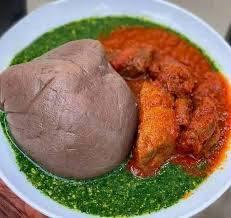
AMALA (YAM FLOUR)
Amala and Ewedu is one of the most popular and culturally significant meals among the Yoruba people of southwestern Nigeria. This traditional dish is not just food; it represents heritage, family gatherings, and the rich culinary history of the Yoruba culture. It is widely enjoyed across different parts of Nigeria, especially in Yoruba-speaking states.
Amala is a smooth, stretchy swallow made primarily from yam flour. The flour is derived from dried yam, which is peeled, sliced, dried, and ground into powder. When prepared, the yam flour is poured gradually into boiling water and stirred continuously until it forms a thick, smooth dough. Amala is known for its dark brown color and slightly earthy taste. There are different types of Amala, including amala isu (made from yam flour), amala lafun (made from cassava flour), and amala ogede (made from plantain flour). However, amala isu is the most common type served with Ewedu.
Ewedu is a light, slimy soup made from jute leaves. The leaves are cooked and blended or traditionally pounded with a broom-like whisk called “ijabe.” The result is a smooth, green soup with a slightly slippery texture. Ewedu is usually seasoned lightly with salt, locust beans (iru), crayfish, and sometimes a little pepper. Palm oil may also be added for flavor and color. The soup is known for being easy to digest and highly nutritious, as jute leaves contain vitamins and minerals that support good health.
Amala and Ewedu are rarely eaten alone. The meal is often served with gbegiri (a smooth bean soup) and topped with a rich stew made with pepper, tomatoes, onions, and assorted meats such as beef, goat meat, tripe (shaki), cow skin (ponmo), and sometimes fish. The combination of the stretchy amala, slimy ewedu, creamy gbegiri, and spicy stew creates a balanced and satisfying taste that many people love.
This meal is commonly eaten in Oyo State, particularly in Ibadan, where amala spots are very popular and busy every day. Ibadan is often regarded as the home of amala because of how deeply the dish is rooted in the city’s food culture. Many visitors to Ibadan make it a point to eat amala from local restaurants and roadside bukas.
Amala and Ewedu are also widely consumed in other Yoruba states such as Ogun State, Osun State, Ondo State, Ekiti State, and Lagos State. Although Lagos is cosmopolitan, amala remains one of the most sought-after traditional meals in the state. In fact, many amala restaurants in Lagos are owned by people from Oyo State.
Beyond the southwest, amala and ewedu can be found in many Nigerian cities due to migration and the spread of Yoruba culture. However, it remains most strongly associated with the Yoruba people and their southwestern homeland.
In conclusion, Amala and Ewedu is more than just a meal; it is a symbol of Yoruba identity, hospitality, and tradition. Its unique taste, texture, and cultural importance make it one of Nigeria’s most cherished indigenous dishes.

Категории
Больше
Eva Alordiah Eva Alordiah did not enter the Nigerian music industry to fit in. She entered to challenge it. In a space long dominated by male voices, bravado, and street narratives, Eva arrived with fire in her pen and confidence in her delivery. She was bold. She was intelligent. She was unapologetically herself. But long before she became known as one of Nigeria’s most respected...

Relief swept through Aiyetoro Kiri community in Bunu land, Kogi State, as six remaining ECWA worshippers abducted by terrorists were finally released after weeks of negotiations and ransom payments. The Aiyetoro Kiri Bunu Development Association (AKBDA) confirmed the development on Wednesday, describing it as the end of a painful and traumatic chapter for the victims, their families, and the...

Lamido Sanusi In the ancient northern city of Kano, where history is layered in sandstone walls and royal drums echo across centuries, a child was born into a lineage that understood both power and its price. His name was Sanusi Lamido Sanusi. He would grow to become an economist of global reputation, a banking reformer who shook Nigeria’s financial system, and later a monarch...

The Ibenanaowei of Ekpetiama Kingdom in Bayelsa State, King Bubaraye Dakolo, has criticized the Federal Government for its failure to identify, prosecute, and jail the true masterminds behind the persistent oil theft plaguing the Niger Delta, despite the loss of trillions of dollars’ worth of crude oil. Speaking on Channels Television’s The Morning Brief, King Dakolo, who also...

Dr Julius Mubiru Dr Julius Mubiru’s story is the kind that begins in a hospital ward, not in a boardroom. It begins where fear often arrives before treatment does. In many hospitals across Uganda and much of Africa, one of the most ordinary procedures in medicine can become one of the most stressful: finding a vein. For many adults, a blood draw or intravenous line is unpleasant...