Σχετικά
Attitude of a friend

I used to think that friends were supposed to be your safe space the people who lift you up when life knocks you down, the ones who cheer for your victories even when they sting a little with jealousy. I thought that. Until I met Chike.
We met in university, during our first year, both trying to navigate the chaos of lectures, hostel life, and endless assignments. Chike was charming, always quick with a joke, and I’ll admit, I was drawn to his energy. We bonded over shared classes, shared meals, and the kind of deep conversations that only happen late at night when you’re too tired to care about appearances. I trusted him completely.
Over the years, our friendship grew or at least I thought it did. I shared my dreams with him: my plans to start a small business, my hopes of moving into a better job after graduation. And he seemed supportive. Always had a word of encouragement, always promising to “help me make it big.”
The first red flag appeared subtly. I was at a gathering with mutual friends when I overheard Chike talking about me in a tone I’d never heard directed at me. “She thinks she’s so smart, but she has no idea how the real world works,” he said. I froze. I tried to convince myself that maybe I misheard, or maybe he was joking. But the seed of doubt was planted.
It got worse after graduation. I had been searching for a job for months. I mentioned this to Chike one afternoon over coffee. He leaned in, smiling, and said, “Don’t worry. I have connections. I’ll get you a position at my company. Just leave it to me.” I was relieved and grateful. I trusted him completely, telling myself that some people really do come through for friends.
A few weeks later, I discovered the truth. The position he had promised didn’t exist. In fact, he had been telling mutual friends that I was “too difficult” to work with and “unqualified,” painting me as incompetent. Friends I had shared dreams with were suddenly hesitant to mention me, unsure whether I was reliable. I confronted him, and he laughed it off. “I was just joking around. People can’t take everything seriously.” But it wasn’t a joke it was deliberate, calculated, and it cut deep.
Then came the worst part. There was a disagreement in our social circle about a community project. I supported one side, believing it was the fair and ethical choice. Chike, however, sided with the opposite group, whispering to them that I was “selfish and manipulative,” urging them not to trust me with responsibilities. I was blindsided. Not only had he lied to people about me, but he actively worked against me.
The betrayal was suffocating. I felt exposed, humiliated, and deeply hurt. Someone I considered a brother had spent years undermining me behind my back, while I had been nothing but loyal and supportive to him. Every word he had said to me in confidence now felt like a lie, every laugh, every shared secret, tainted.
I eventually distanced myself, but it wasn’t easy. Our social circles were intertwined, and cutting him off meant facing awkward questions and tension. Some friends didn’t understand why I had stopped speaking to him they thought I was overreacting. But how do you explain betrayal? How do you make someone understand that a person you trusted has been working against you all along?
Time passed, and I began to heal. I focused on building my career independently, finding real opportunities without relying on false promises. I learned to identify people’s true intentions, to observe actions rather than words. And most importantly, I learned that friendship is not just about shared history it’s about loyalty, trust, and support, all of which Chike had lacked.
Even now, I sometimes hear about him through others. He’s still charming, still popular, still “helping” friends in ways that serve him more than them. But I no longer feel anger or bitterness. Instead, I feel clarity and gratitude for having discovered who he truly is before his betrayals cost me more than pride.
Betrayal by a friend is a unique kind of pain. It’s not just that someone hurt you; it’s that someone you let into your life, someone you confided in and believed in, chose to betray your trust for their own amusement or gain. I learned the hard way that words alone cannot measure friendship. Actions do. And in that measure, Chike failed miserably.
Now, I’m more cautious with my heart, but not closed off. I still value friendship deeply, but I choose to invest in those who lift me up rather than tear me down, who celebrate my wins rather than spread lies, and who stand by me instead of secretly working against me. The lesson was painful, but invaluable: sometimes, the person who smiles the widest at you is the one who will stab you in the back. And that, painful as it is, is a lesson worth learning.

Κατηγορίες
Διαβάζω περισσότερα
Nnamdi Kanu, leader of the Indigenous People of Biafra (IPOB), has rejected the life sentence handed to him on terrorism charges, insisting that the judgment has no legal foundation. This was disclosed on Sunday by his brother, Kanunta Kanu, who said that Prince Emmanuel Kanu and Dr. Maxwell Opara visited Kanu at the Sokoto Medium Security Prison following his transfer from DSS custody. Kanu...

The global cybersecurity landscape is undergoing a radical transformation as digital ecosystems become more complex and interconnected. As organizations transition to cloud native environments and expand their digital footprints, the volume and sophistication of cyberattacks have escalated. In response, the Threat Intelligence Market has emerged as a critical pillar of modern defense...

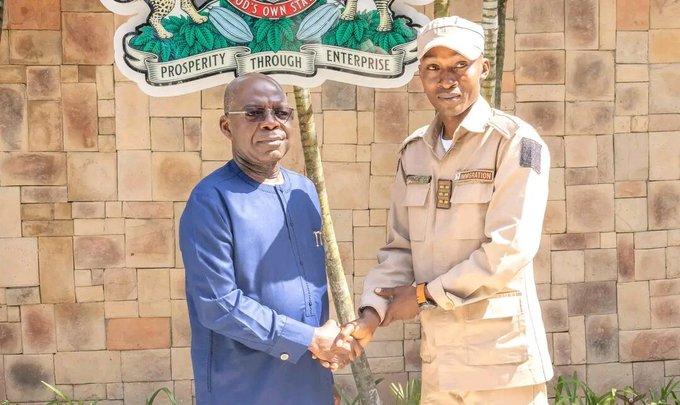
In a remarkable display of integrity, Governor Alex Otti of Abia State has publicly commended Nigeria Immigration Service (NIS) officer Ugochukwu Orji for rejecting a ₦10 million bribe offered by a native doctor implicated in ritual killings. The incident unfolded when Orji apprehended the suspect, identified as Mr. Levi Okoro, who was attempting to flee the country. Upon his detention, Okoro...
Lil Uzi Vert Lil Uzi Vert is one of the most unconventional and influential figures in modern hip hop. Known for a high pitched melodic delivery, eccentric fashion, emotional vulnerability, and genre bending creativity, he emerged from Philadelphia’s underground scene to become a chart dominating star whose music defined a generation of internet driven rap culture. His life story...

Gbenga Adeboye Gbenga Adeboye was a Nigerian comedian, actor, musician, and radio presenter. He was widely regarded as one of the pioneers of Yoruba comedy and comedy music in Nigeria. Early Life and Background Gbenga Adeboye whose full name was Gbenga Adeboye was born on July 3, 1959, in Abeokuta, Ogun State, Nigeria. He grew up in a Yoruba cultural environment where storytelling,...